
A Murder (or Two)
This page contains material that may upset some readers
A MURDER IN INGE STREET
Having crossed over Inge Street at the Queen pub we start to walk back towards Hurst Street but within a few yards we will find ourselves at the location of an event that took place in 1903.
The weather around Christmas in that year had been frosty and unsettled, when Martha Simpson met Charlie Dyer. You would describe 21-year-old Martha as attractive and she used her charms to earn a living.
Charlie had found himself lodgings at No 2 Court 7 at the other end of Inge Street, opposite the Queen’s Tavern and Martha moved in with him there.
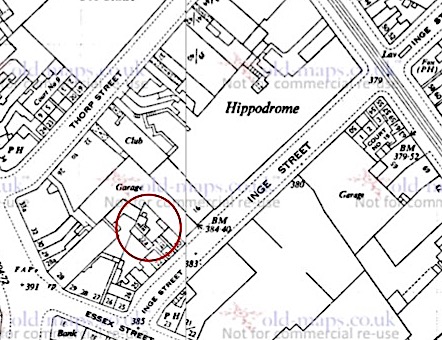
One of Martha’s closest friends was Maggie Moran, who lived around the corner in a house off Bristol Street.
During the afternoon of the first Wednesday in the following February, Martha and Charlie Dyer went to Maggie’s where they had some dinner. Martha and Maggie stayed in while Charlie went out to a pub for a drink or two. Later they also went out and walked on to another pub in Old Meeting Street, seen here.
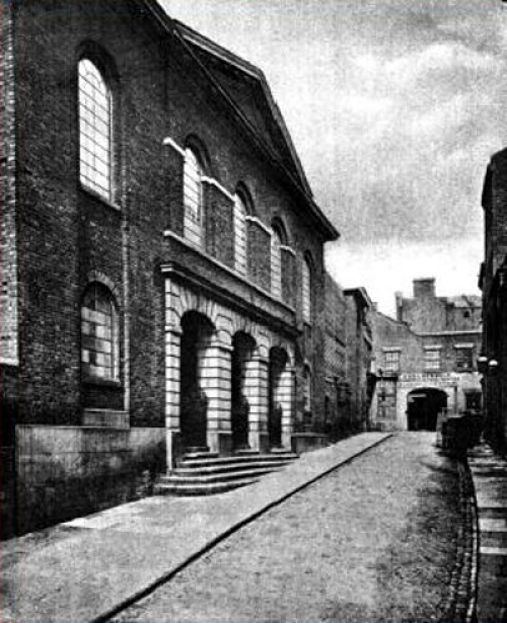
There Martha met up with a young man who treated them both to a drink. Maggie left the pub at about eleven not wishing to cramp Martha’s style and she returned home.
Half an hour later Martha appeared at the house in Bristol Street with the young man, he and Martha went upstairs where no doubt some business took place. He was there for about 15 minutes before leaving, and as he strolled out of the house, Charlie arrived with Maggie’s lodger Arthur. Charlie was the worse for wear. They all enjoyed more drinks, then Martha and Charlie went back to their home in Inge Street
However, they had not been gone more than 10 minutes when Charlie reappeared, white faced, and threw himself into a chair in Maggie’s house crying out, “Oh Maggie! I’ve done it. Save her if you can.” Even by the gloom of the candlelight which flickered in the room, Maggie could see there was blood streaming down Charlie’s fingers. Something terrible must have happened and Maggie, together with Arthur, ran to the house in Inge Street. There they found Martha sitting in an armchair, a massive gaping wound in her throat and blood pouring down her clothes. She was already beyond all help.
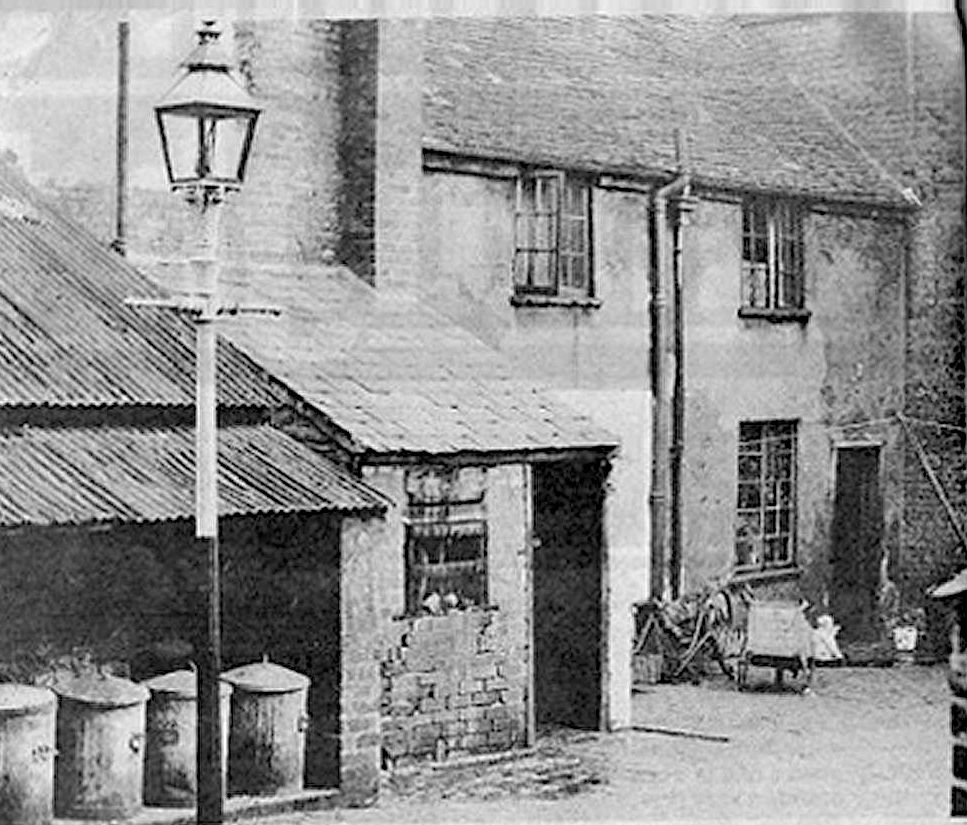
A policeman had seen Charlie running away from Inge Street, and he watched as Charlie vanished down the entry which led to Maggie’s house. He started to follow, when Maggie and Arthur came running past him. The policeman went down the entry until he came to the house where the door had been left open. There he found Dyer, sitting in the chair, with blood still dripping from his fingers. After taking brief details he took Charlie to Moor Street police station.

On the way Charlie remarked “I struck her on the head with a poker and then drew the razor across her throat. I gave 3/6 for it.”
Information then arrived that Martha Simpson has been found dead and Charlie Dyer was charged with her murder. To that he replied, “Correct, I plead guilty”.
At his trial two witnesses confirmed that they had been there on the Wednesday evening. They stated that Martha had stood up but Charlie hit her and knocked her under the table. He pulled a razor from his pocket, screaming “I will put this across you tonight.” They left and Martha and was still under the table calling out “Maggie, Maggie don’t let me go home tonight, he’ll murder me.”
The defence called no witnesses, but relied on a plea by Charlie Dyer that he was sorely provoked, because Martha had picked up a poker and lashed out, so he defended himself with the razor.
The jury retired and took just 90 minutes to decide that Dyer had realised what he was doing and was therefore guilty as charged. Dyer was sentenced to death by hanging.
Dyer rose very early on the morning of Tuesday April the 5th, 1904, and ate a hearty breakfast. By 8 o’clock a crowd had gathered outside the prison gates at Winson Green and Charles Dyer was hanged by the official executioner William Billington. Later that morning Dyers body was buried within the prison walls in a plain black coffin.
Now you may wonder what sort of person made executions their chosen career. This photograph is of Dyer’s Executioner, William Billington ……
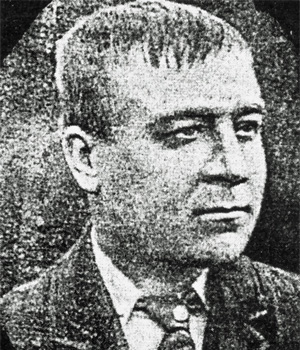
….. who was born in 1875 and carried out his first hanging at the age of 24. William went on to become the principal executioner for England. He was a minor celebrity, with folk wanting to catch a glimpse of this relatively young hangman.
William was married with two children, but he had problems with drink. In 1905, he served a one-month prison sentence for failing to pay maintenance to his estranged wife. All in all, he carried out 58 hangings and he died in 1952.
~~~~~~~~~~~~~~~~~~~~~~~~
A STABBING SPREE
It was the early hours of Sunday the 6th of September 2020 when the following unfolded across the streets of Birmingham City centre. This report is from a national newspaper in the following June.
A man has pleaded guilty to the manslaughter of a university worker in a series of knife attacks in Birmingham last year that left seven other people seriously injured.
Zephaniah McLeod, 28, of Selly Oak, also admitted four counts of attempted murder and three charges of wounding with intent to cause grievous bodily harm on the grounds of diminished responsibility.
McLeod, who appeared in Birmingham crown court via a video link from Ashworth hospital, carried out the stabbings in the early hours of Sunday 6 September last year, as the city was packed with revellers.
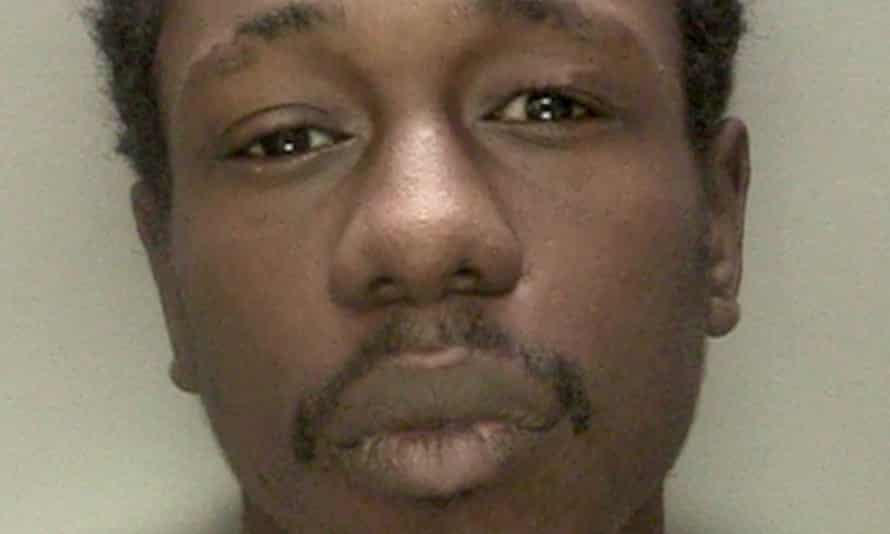
McLeod was diagnosed with paranoid schizophrenia, the court heard, and has been in custody since being charged with the attacks.
At about 12.30am on 6 September 2020, a 33-year-old man was stabbed on Constitution Hill, leaving him with a neck wound. Twenty minutes later, a 25-year-old woman was stabbed in her shoulder on Livery Street and, minutes after that on Barwick Street, a 29-year-old man was left in a critical condition with a chest wound.
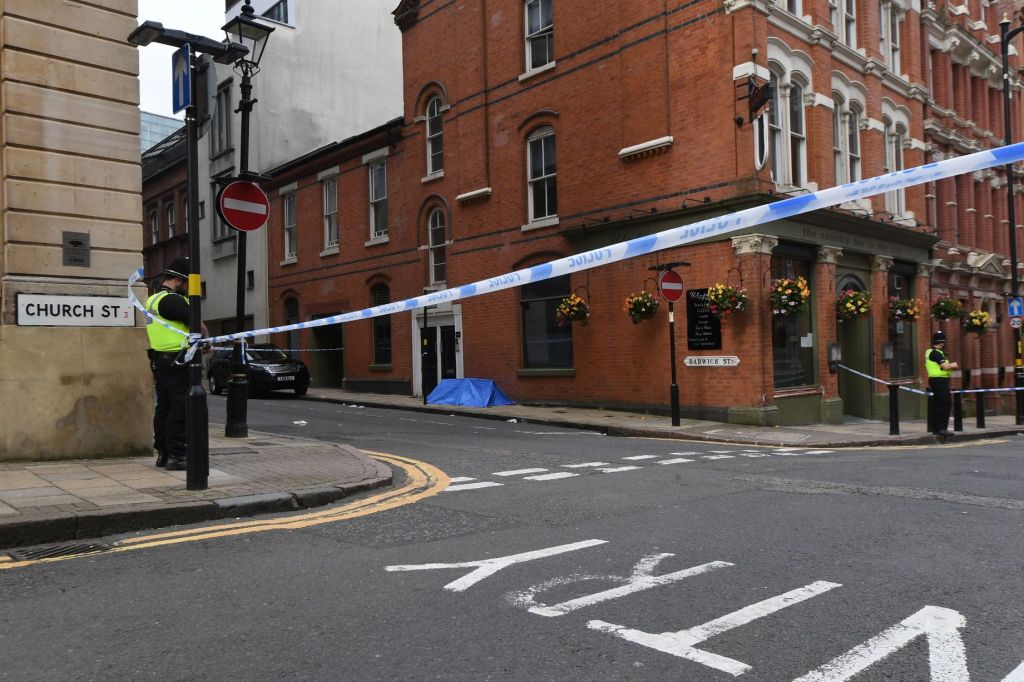
From the CCTV evidence, it emerged that after leaving Barwick Street, McLeod dumped his knife in a drain and caught a taxi to his home in Selly Oak, where he re-armed himself before heading back into the city centre to continue his assault an hour later.
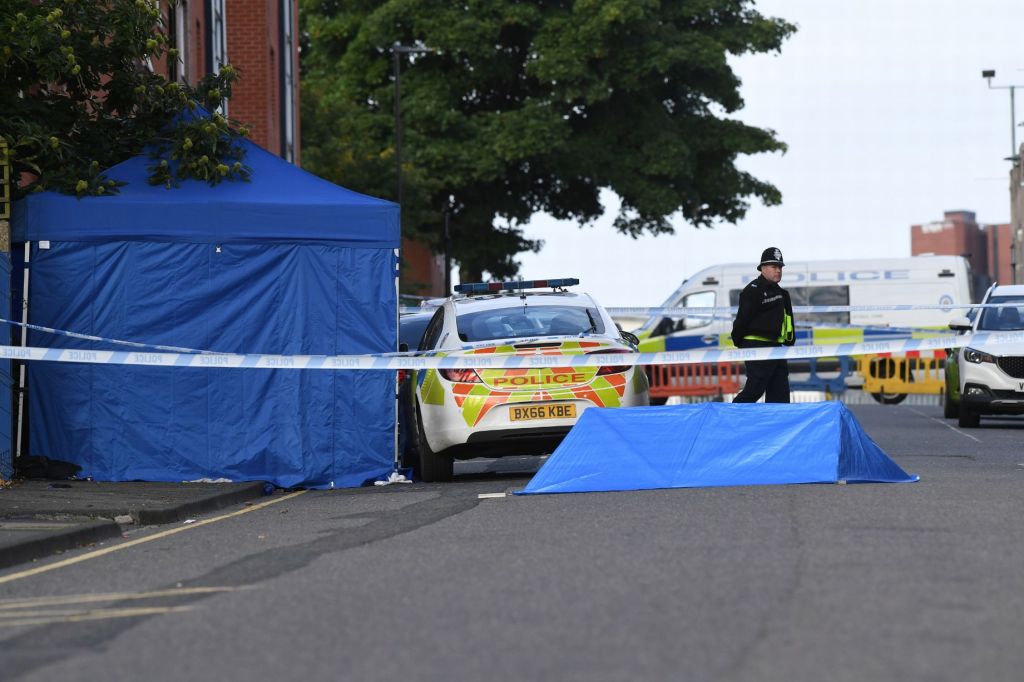
At 1.50am on Irving Street, less than half a mile from Hurst Street, McLeod attacked a group of school friends from Liverpool who were returning to their hotel after a night out while visiting one of their group who was studying in Birmingham. Jacob Billington, a 23-year-old graduate trainee at Sheffield Hallam University, was fatally stabbed in the neck and his close friend, Michael Callaghan, also 23, was critically injured.

McLeod then moved on to Hurst Street where two men, aged 29 and 24, were stabbed and he also inflicted critical injuries on a 23-year-old woman shortly afterwards
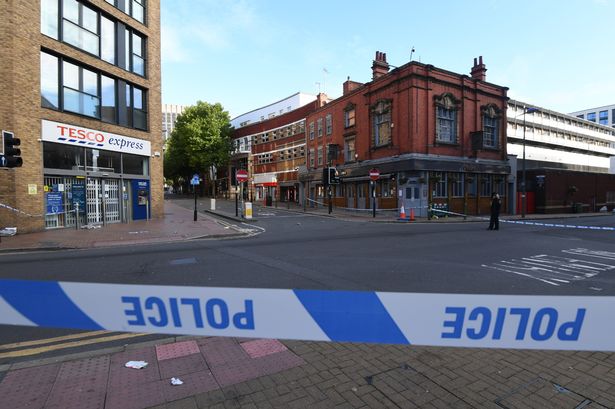
Police used CCTV footage from across the city and matched the clothing McLeod wore to witness and victim descriptions. He was arrested from his home address 24 hours later.
Billington’s family, who were present at the hearing, described him as “the light of our life” in a statement issued at the time. “He lit up every room with his boundless energy and witty humour and the loss of such a special person will be felt by all who knew him for years to come,” they said.
The West Midlands police force was criticised in the aftermath of the attacks for its reaction times, including concerns footage of the suspect was not released quickly enough, but the chief constable, Dave Thompson, later defended his officers’ “reasonable and well-considered” response to the attacks. DCI Jim Munro, who was the senior investigating officer for the case, said the force often received several reports of assaults, some involving weapons, on a busy weekend so the incidents were not automatically linked.
“McLeod has never given an explanation for his actions that night which leaves no closure for his victims or their families and friends, although I am pleased that the admission of his crimes has spared those involved the ordeal of a trial.” Munro said. McLeod will be subject to mental health reports ahead of his sentencing on 27 and 28 September 2021.


 hurst-street.com