
The Black Lion and Worthington’s Coaches
The Black Lion
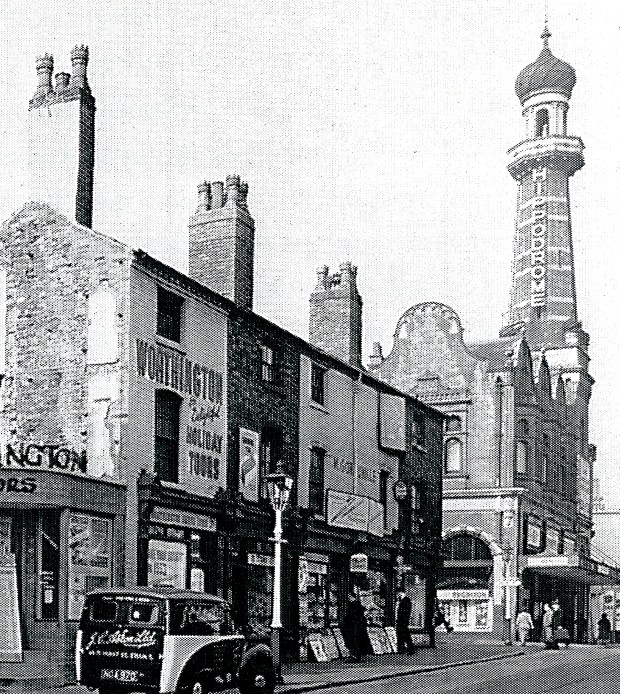
Photographs of the Black Lion pub are rare, but the building in 1953 just creeps in on the left in this photograph below.
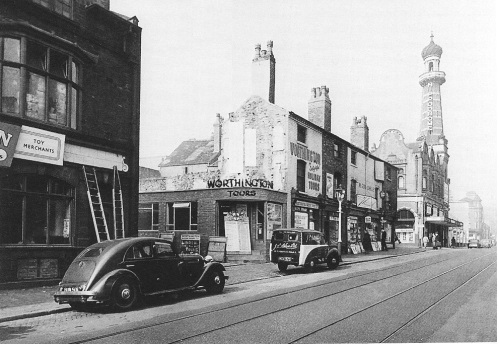
Worthington’s booking office next to it
Building started in the streets in the area during the last decade of the 18th century (1790s) and went on for the next four decades. From this we may assume that the Black Lion was probably built by 1820.
In the rates plan drawn up for the council in 1895 (below) we can see the location of The Black Lion and the two pairs of back to back houses to the north that occupied the gap in the photograph above along with the entry to Court 2 Hurst Street.

These houses and the 18 back houses, along with the whole of Court 14 Inge Street were all demolished when the Red Warrior coach company (see below) built their garage.
Here is a photograph of the front of The Black Lion, probably taken around the year 1920.
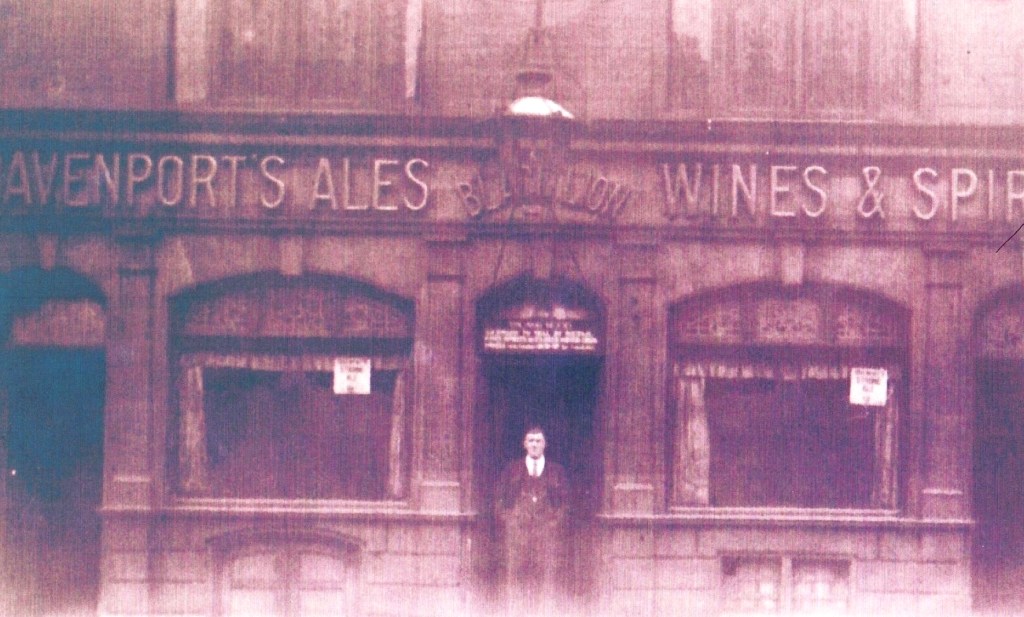
According to census and other records the landlord of the Black Lion in 1875 was Robert Manton, but by 1881 he was no longer with us and his widow Elizabeth was listed as the publican (landlord). She was assisted by her daughter (also Elizabeth) and son Charles. Her two other sons Thomas (10) and Arthur (9) were also living at the pub. Another son, Frederick who was 14 was not listed.
Ten years later Elizabeth who was now 58 years old was still running the Black Lion, but daughter Elizabeth and son Charles were no longer around, probably having got married and moved away.
Also living over the pub were sons Frederick (24) who was a butcher, Thomas (21) who was an upholsterer and Arthur (19) who worked in the printing trade. But times must have been tough as Elizabeth also had no fewer than 6 lodgers and there was a “general servant” called Emily Griffin, who’d come from London – all packed into the rooms over the pub. These lodgers came from far and wide and had a variety of jobs: Frederick Pegg was a Boot Finisher from Leicester; Thomas Waller from Barnsley and Mancunian William Brown were both Boot Riveters; Henry Dandson from Walsall was an Iron Tinplate Worker; Harry Franks was a Tailor from Cork and Henry Parfitt, a Clerk, was from the USA. A veritable united nations under Mrs Manson’s roof!
The following year (1892) Elizabeth had hung up her apron, because a George Smith appeared to be running the Black Lion, succeeded by Benjamin Hall in 1900. Four years later Thomas Hazelhurst’s name was over the door and a year later it was John Gibson; by 1908 William Alfred Knight was listed.
By the end of the Great War pub licencing required the landlord’s name to be displayed above the door, as is the case in the photograph. James Roach was the licensee in both 1915 and 1921 and the last landlord showing on the records in 1939 was Joseph Arthur. So either of the last two gentlemen could be the aproned person in the doorway above, depending upon exactly when the photograph was taken. Some time during the WW2 the pub was closed because after the war the building had been taken over by the company JC Aston who were wholesale newspaper distributors.
Worthington’s Coaches
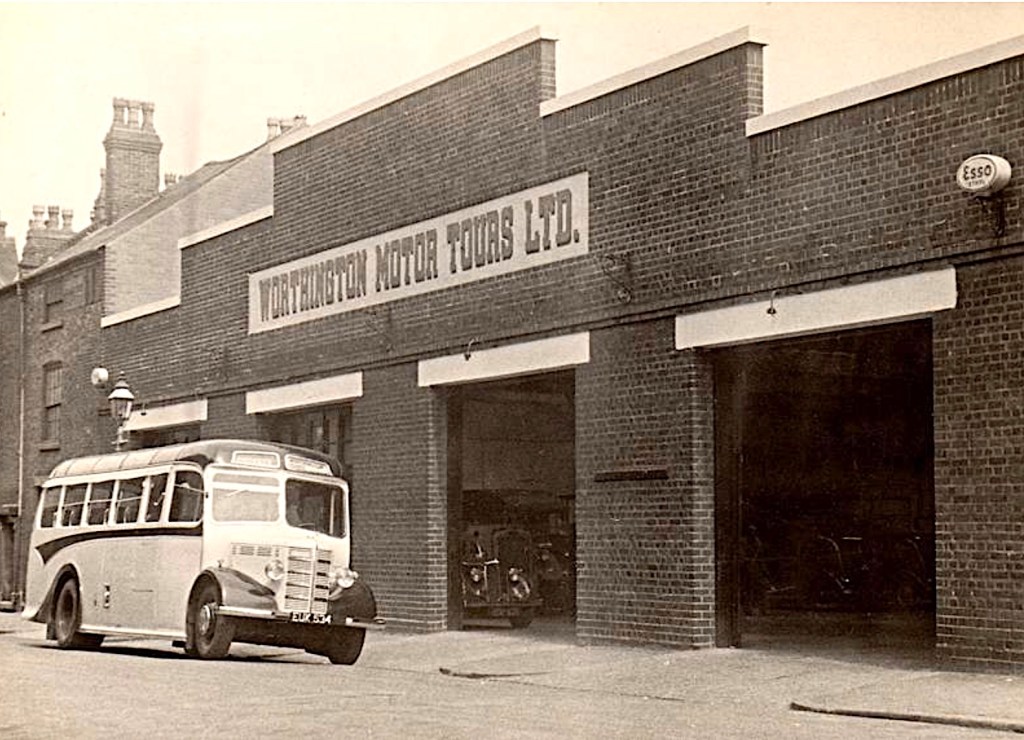
In the gap between the old Black Lion and the three storey building there was, by 1953, a single storey building used by Worthington’s Coaches. In the gap originally were two “front” houses and the entry to Court 2 Hurst Street. One of these was at one time used by William Johnson, who was a sawdust dealer – a strange trade you may think, but sawdust was used regularly by butchers & fishmongers, and by pubs to soak up the spilt beer!
But let’s take a look at the name over the single storey building, and painted on the front of the first of the three storey buildings – Worthingtons. The premises in Hurst Street originally belonged to Red Warrior Coaches, who had taken the leases on Court 2 Hurst Street and Court 14 Inge Street in or around 1937. They demolished all the houses in both courts and built a new garage covering the land surrounding two sides of Court 15 Inge Street which stands on the corner. Red Warrior was taken over in May 1947 by Worthingtons – the Staffordshire bus & coach company that wanted to establish a base in Birmingham.
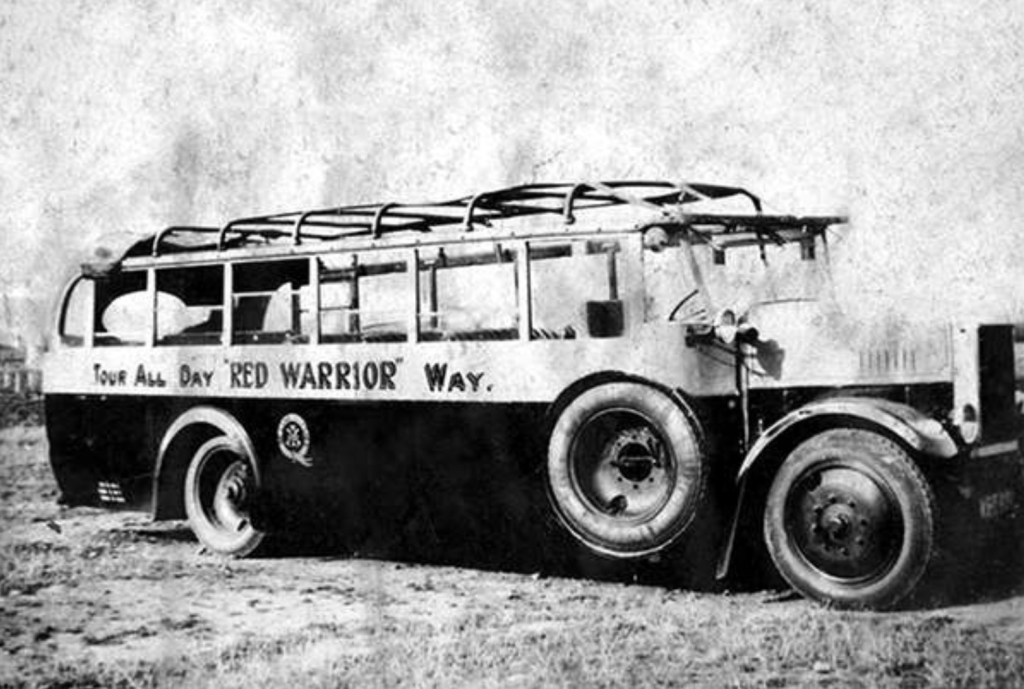
Red Warrior charabanc – 1931 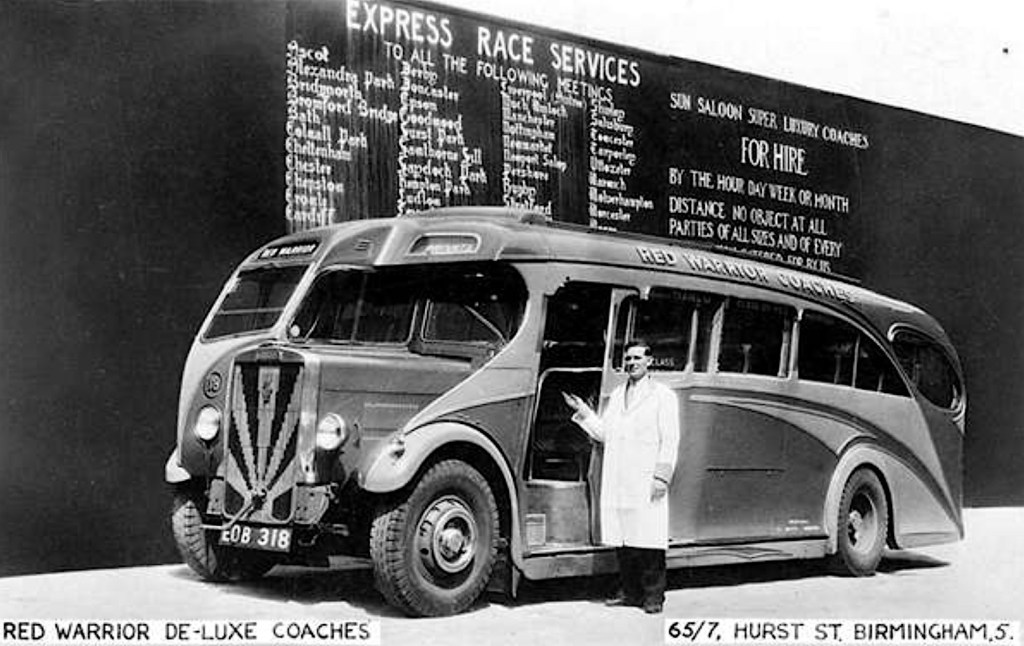
Red Warrior Leyland coach – 1938
Many Brummies remember going to Hurst Street to catch one of Worthington’s coaches to set off with buckets & spades on journeys to exotic places such as Weston-super-Mare and Great Yarmouth. Great excitement! Worthingtons spread their wings and went on to take coach loads on tours of Europe.
Tony Morgan was a driver at Worthingtons, starting there in 1966. During his first week he was introduced to the owner, Mr Jack Worthington, and described him as a large flamboyant and extrovert man, unsteady on his feet, who suffered with diabetes and travelled everywhere – even across Hurst Street to the barbers for a shave – in a black chauffeur-driven Jaguar the registration number of which was 1920 E commemorating the year he started in business with a cycle shop in Stone Staffs, before starting the coach business in 1921. The Jaguar can be seen in the photograph above of the Worthington’s booking office.

Jack Worthington 
The Hurst Street entrance to Worthingtons before the booking office was built
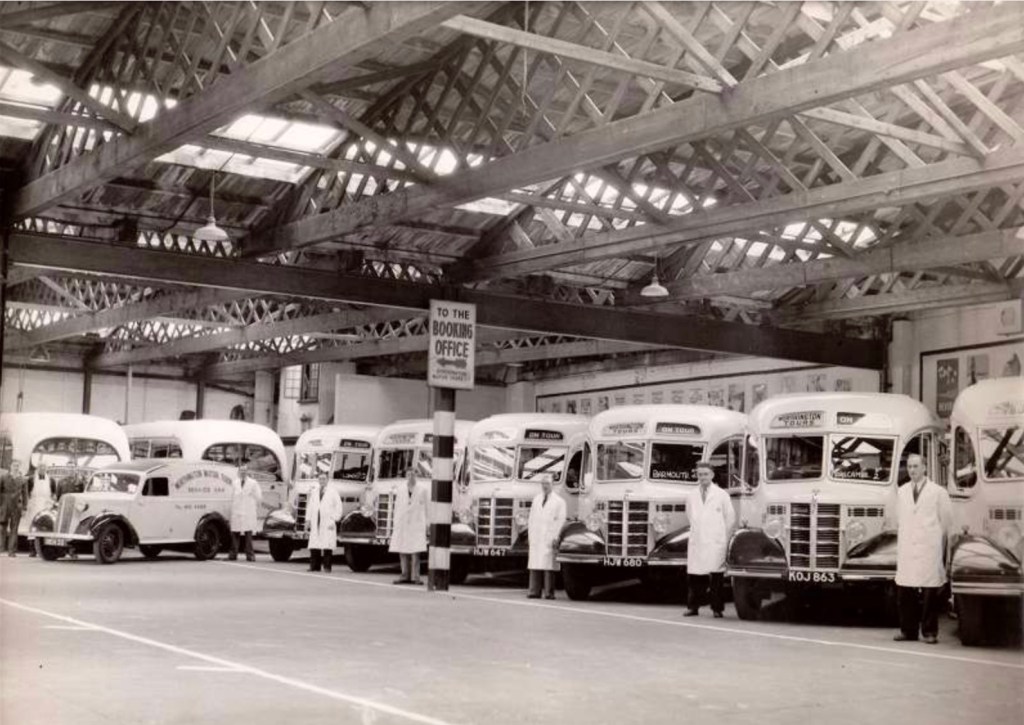
Bedford OB coaches in the garage 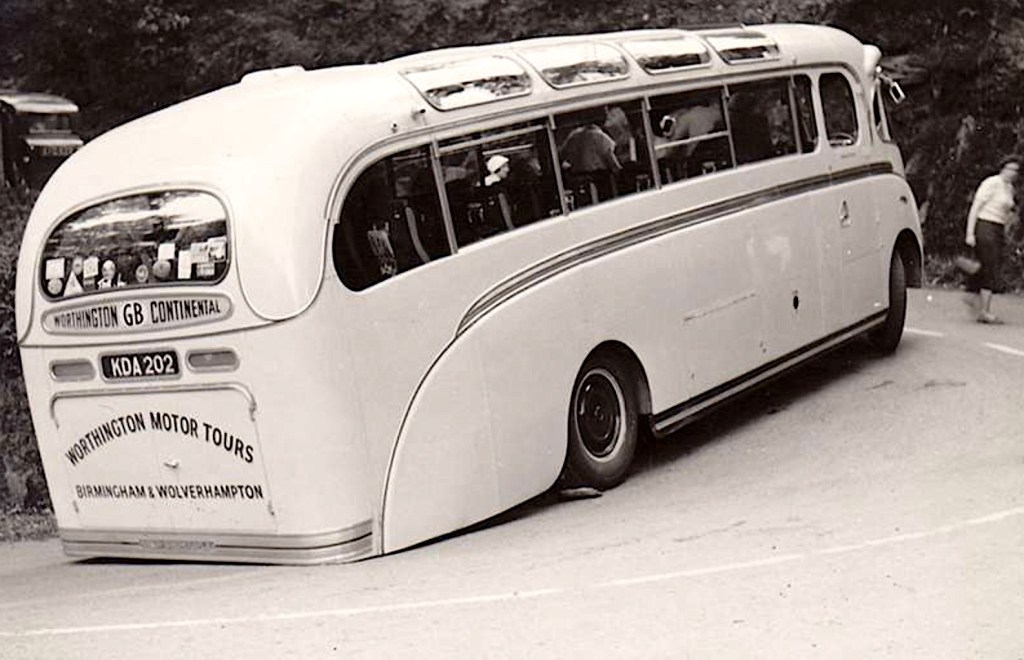
Passengers getting off a Worthington’s coach as it had “grounded” on Lynton Hill in Devon
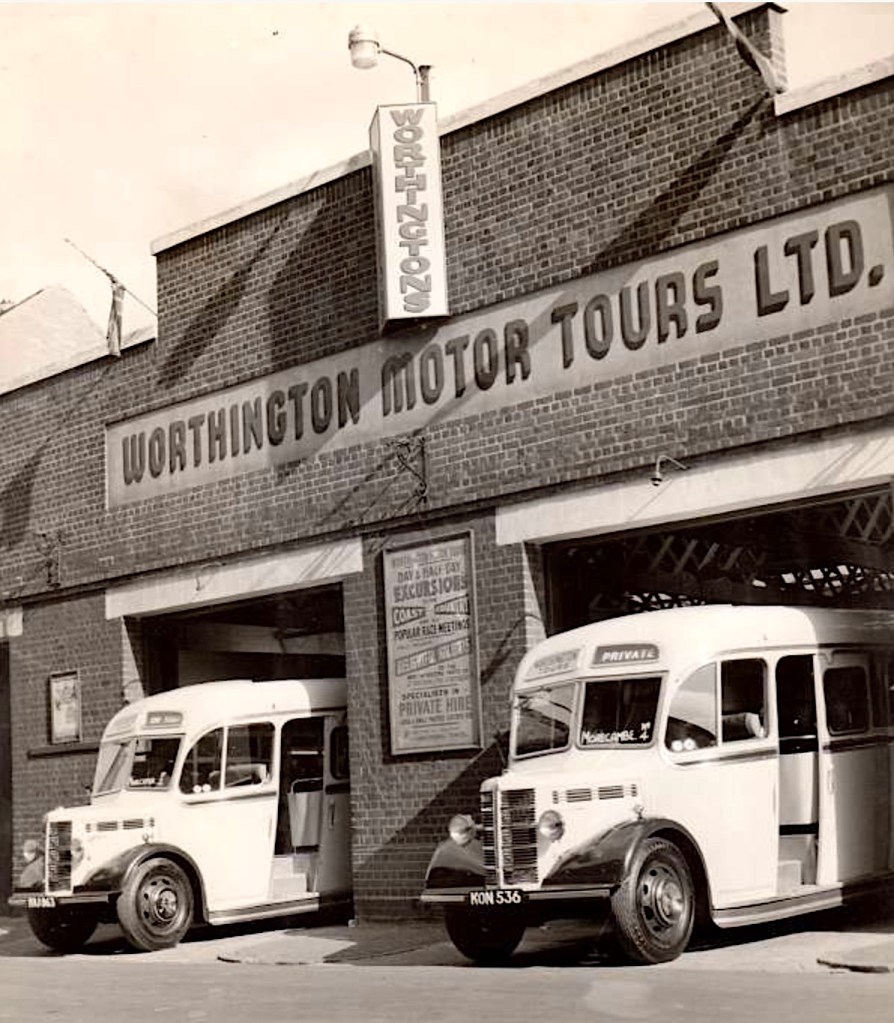
The previous two photographs were taken on the Inge Street side of the Worthington’s garage. Below is a map showing the extent of the garage and another after the garage was demolished.
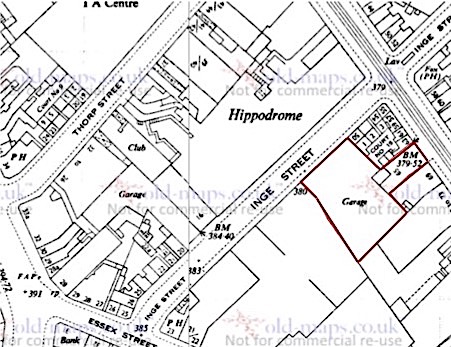
Inge Street map – Worthington’s is outlined in red 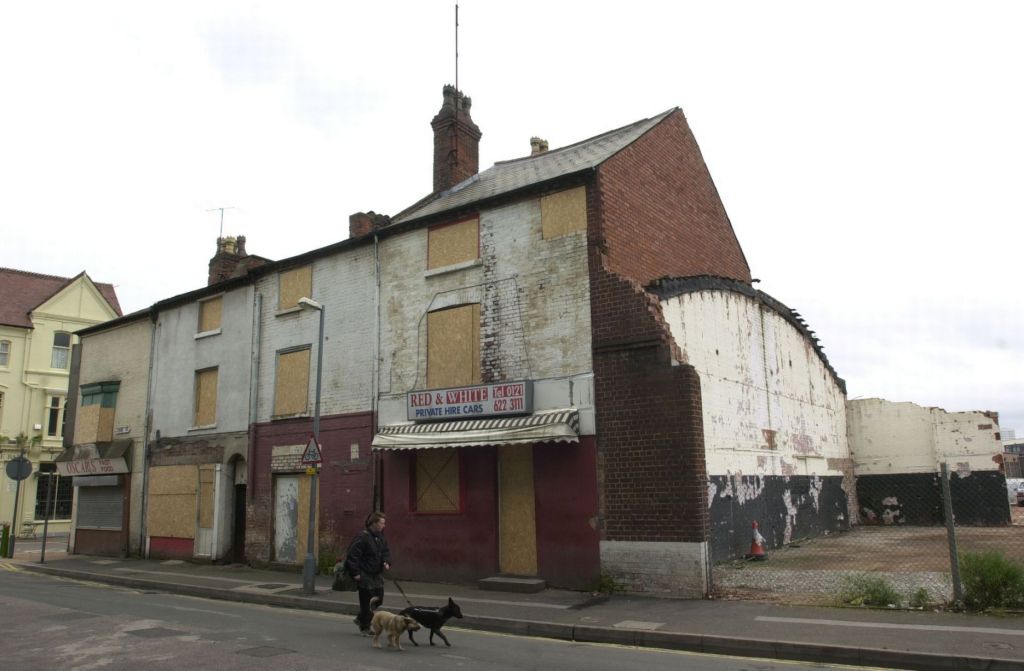
The outline of the roof of Worthington’s garage on the side of Court 15 Inge Street
“Worthington’s & Pye”
Worthington’s had used the site at Hurst Street from 1947 to 1974. The company was eventually taken over by National Travel, during the shake-up of bus and coach companies in the 1970s, and they continued to use the Hurst Street garage for a few more years. At the end of Worthington’s days the Pye two-way radio company used the garage for its operations, fitting radios in taxis and fleets of vans. Around the turn of the century the garage was demolished and the outline of the roof of the garage can be seen on the wall of Court 15 Inge Street in the photograph above.
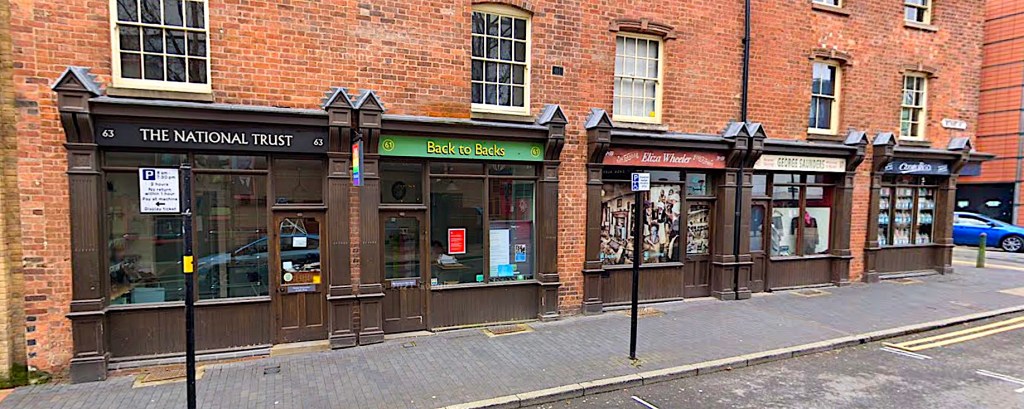
To round off our journey up the stretch of the west side of Hurst Street up to Inge Street we would have found a rather nondescript row of shops here in the 1950s, in fact they were still there by the year 2000. But that is another story.
 hurst-street.com