
Hurst Street from Bromsgrove Street to Inge Street
Almost the whole of the block bounded by Hurst Street, Inge Street, Essex Street and Bromsgrove Street now consists of the “Southside Apartments” development. This has a number of retail outlets on the ground floor and at the northwest corner of the Bromsgrove Street and Hurst Street junction is now Tesco Express where we are going to turn left.
The whole of this block was first built on at various times from the end of the 18th century when the Gooch Family started letting out plots of land, usually on 99 year leases.
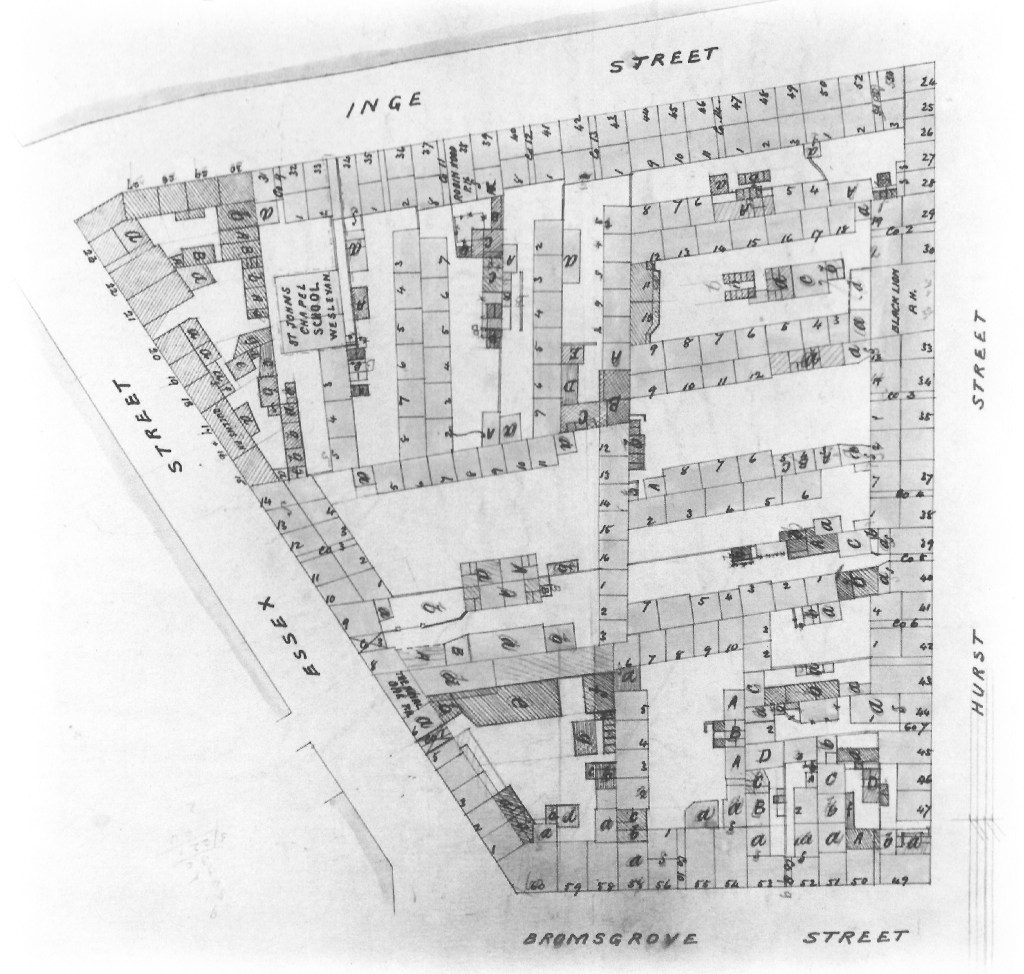
This plan of the block was created in 1895 at the time when the buildings were about 100 years old, by the new city council for the purpose of collecting rates. There appear to be 22 courts of back to back houses of varying sizes each with their “brew’us” and privies. It is roughly estimated that at least 1,000 people could have been living in the houses on the block at any one time. By the time that this plan was created many of the ground floor rooms of the houses facing the street would have been converted into shops, or other small businesses.
For instance, in 1904 the types of businesses to be found on Hurst Street from Bromsgrove Street to Inge Street were Dining Rooms (a cafe), a General Dealer, a Dressmaker, two Confectioners, a Hot Water Engineer, two Bookbinders, a Furniture Dealer, a Boot Maker, two Wardrobe Dealers, a Butcher, a Tool Dealer, three Cap Makers, a Tobacconist, three Tailors, a Slipper Maker, a Boot & Shoe Maker, a Fish & Chip shop, a Baker, two Fruiterer,s a Hairdresser and of course The Black Lion pub. Who could want for more at the start of the new century?
But within 30 years change was afoot. By then just twelve of the 25 properties along here were still standing as the motor trade in the shape of well known Birmingham car dealer, Evans & Kitchen, set up showrooms and service facilities on the southern end of Hurst Street. In addition a vacuum cleaner business set up shop next to the Black Lion, this was Underwood Electric who by the 1950s had become Neptric makers of Vactric cleaners (I know, my mother had one!).
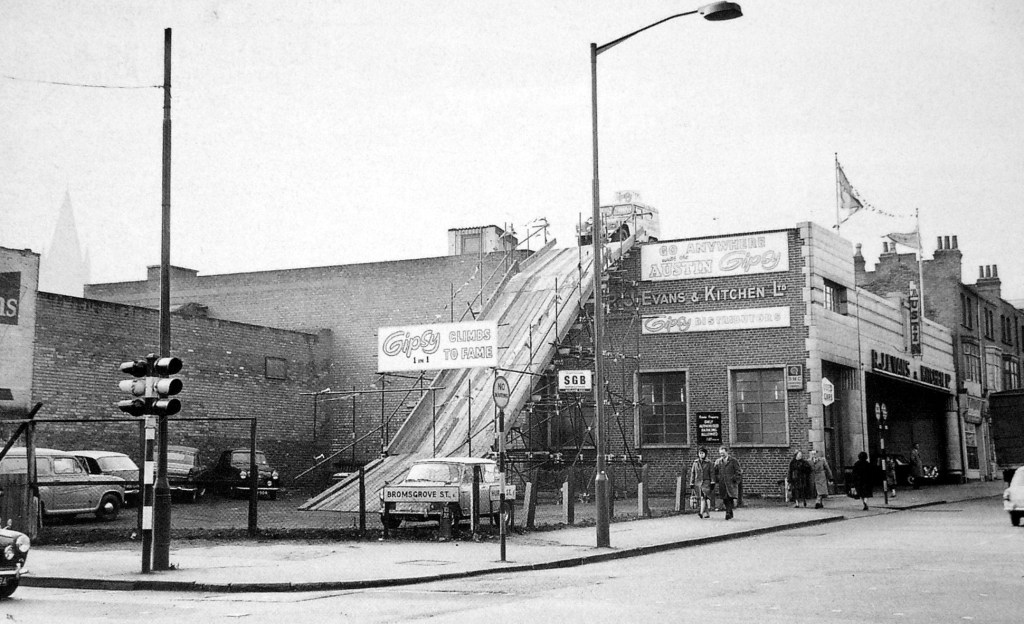
– Austin Gipsy publicity
The photograph above shows the Hurst Street & Bromsgrove corner in 1960. It is thought that the buildings here had been cleared following bomb damage in 1940 and by the time this photograph was taken it was used by Austin dealers Evans & Kitchen as a car park.
In 1958 Austin had set about producing a competitor for Rover’s unique Land Rover, which had been in production for about 10 years. What Austin came up with was the Land Rover lookalike, the Austin Gipsy. The company was finding it hard to make any inroads into the market with the Gipsy. In 1966 the merger between BMC and Jaguar took place and in 1968 it was merged with Leyland Motor Corporation who by now owned Rover. With the new company making two competing ranges of four-wheel-drive vehicles, Land Rover and Austin Gipsy, it was not too long before the Gipsy was phased out. Production ended the same year.

The top photograph on this page was taken looking at the north-west corner of the Hurst Street/Bromsgrove Street corner in 1960, during a publicity stunt for the Austin Gipsy. With Land Rover having such a hold on the market, it was difficult for the Gipsy to be recognised a serious competitor. Various publicity stunts were carried out to arouse public interest. Evans & Kitchen had this 1 in 1 slope built to prove that the Gipsy was a serious competitor. It attracted good media publicity, but the police were not keen as they felt that motorists would be distracted seeing the Gipsy on the roof, or driving up & down the ramp. So after a few weeks it was all removed. It is said that the Gipsy never actually drove up this ramp – it was taken up and lowered by crane.
So, let’s move up the road a short distance. In the photograph below we can see the Evans & Kitchen premises on the left and what was the Black Lion pub on the right.
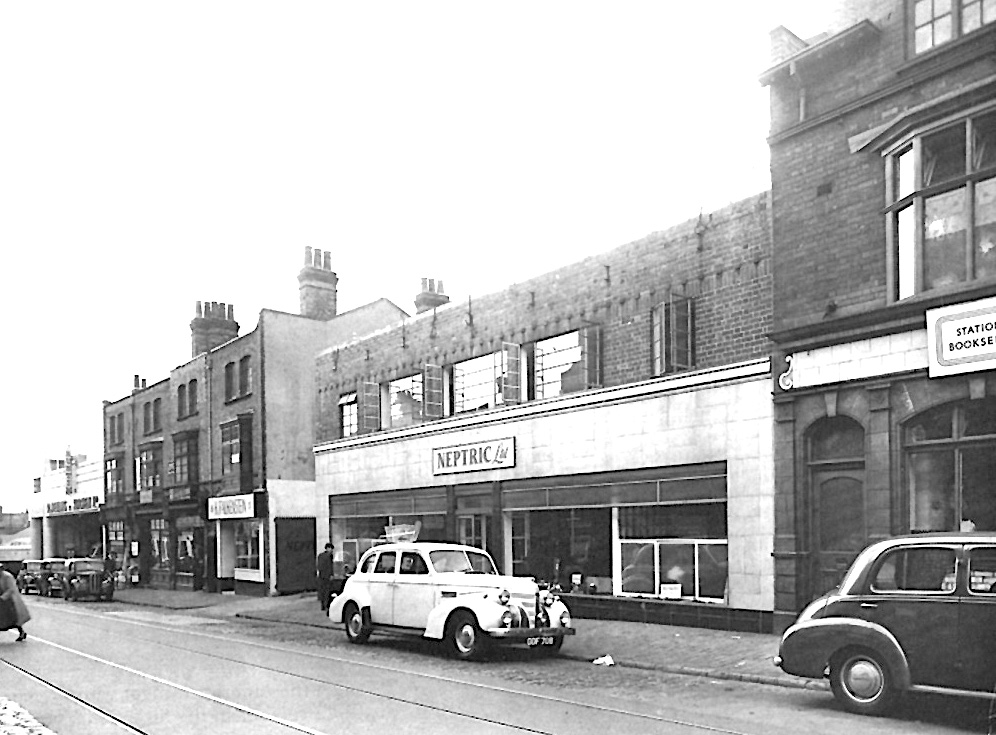
The four shops that remained standing next to Evans & Kitchen that we can see here in the 1950s were: Midland Fishing Tackle Supplies, later George Matthews, a radio dealer. Next was Reginald Ironmonger, who wasn’t an ironmonger, he sold fishing tackle as well. Then came Midland Tool Stores and finally Gertrude and Kurt Falkenstern, who were kosher butchers – with good eyesight you may be able to make out their name on the shopfront.
Between the butcher’s and what was the Black Lion is the premises for Neptric who were dealers in vacuum cleaners. But what is interesting is the white car outside. It is similar to the Ford V8 Pilot which was based on a US Ford design but produced in the UK from 1946 to 1951. The car here is larger and has a split windscreen but we have not yet been able to identify the make. It seems that when US troops were coming to the UK in WW2 they were able to bring their cars with them. (They’re overpaid, oversexed and over here! – and they had a car too.) Many of these were abandoned here after the war as troops may have been de-mobbed directly to the USA, or they may not have been around to see the end of the war. New cars were almost impossible to get here, so there was quite a good market from ex-US cars in the late 40s! This may have been one of them.
On the right in the photograph above is part of what was the Black Lion pub. This was probably built around the end of the 18th century when the rest of the block was developed. Behind it was Court 2 Hurst Street where there were no fewer than 18 back houses. As the local population declined after WW2 the pub closed down and by 1950 it building was occupied by JC Aston Limited, who were listed as Wholesale Newspaper Dealers – they were in good company as we know, because WH Smith and M Mapstone were just across the road in Hurst Street and Ladywell Walk. JC Aston also sold stationery, toys and the other sundries required by newspaper retailers.
In the next page we will look at the Black Lion pub and a well known name for holidaymakers in 1950s Birmingham.
But to round off our journey up the stretch of the west side of Hurst Street to Inge Street we would have found a rather nondescript row of shops here in the 1950s, in fact they were still there by the year 2000. But that is another story.

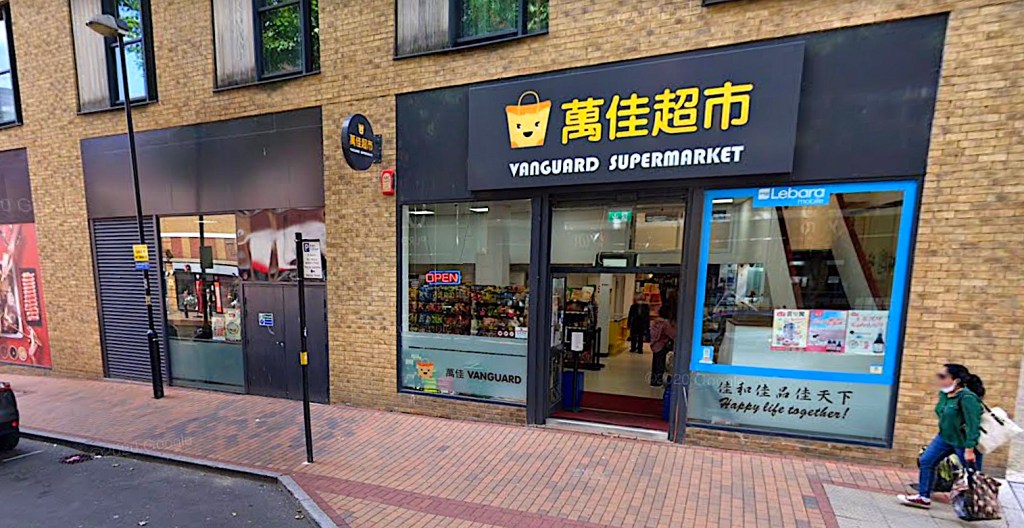
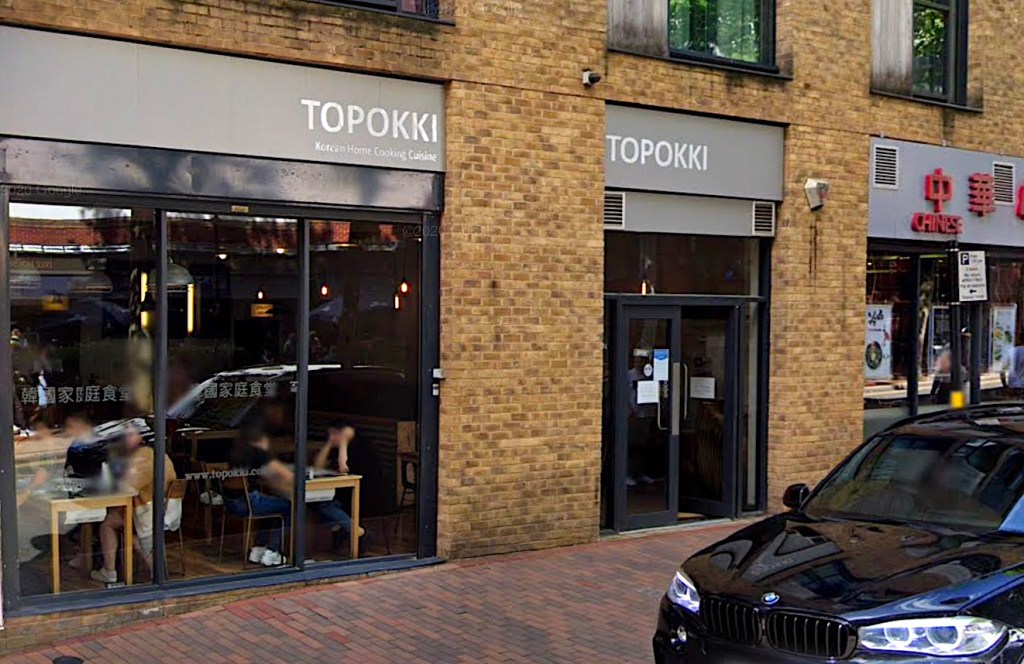
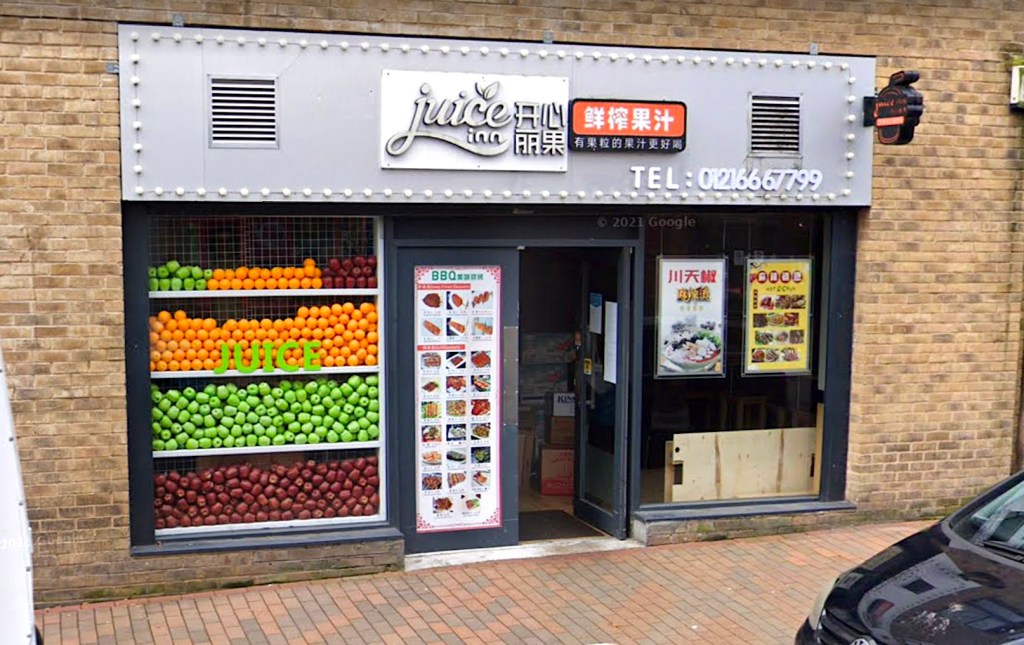
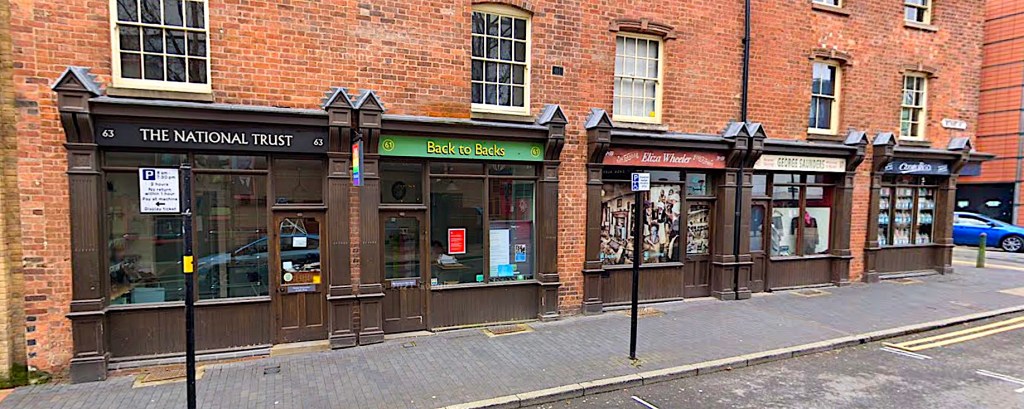
But, here’s glimpse of this part of Hurst Street and the streetscape as seen today starting at Bromsgrove Street.




But now it’s time to take a look at a couple more of the businesses from years gone by that were along here.
 hurst-street.com