
OK, Sherlock!
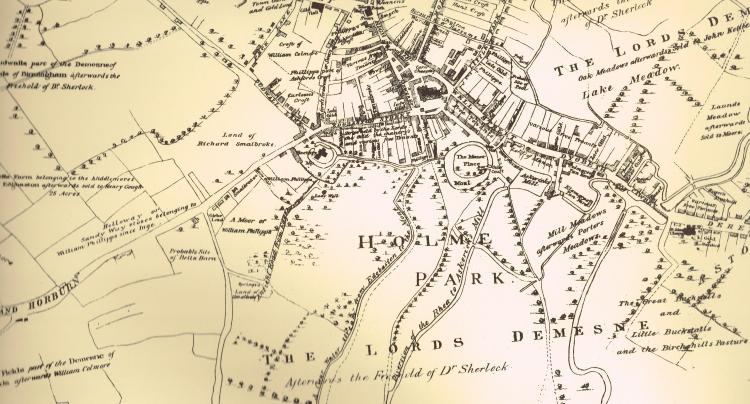
A careful look at the above map from 1553 of the southern part of the town of Birmingham tells us that the “Holme Park” later came into the hands of a Dr Sherlock. This fact had evidently been remembered when the roads and streets of the growing town in the late 18th century were being laid out. Sherlock Street ran from Cheapside and Jamaica Row, near to the markets. It was later extended northwards to Bradford Street with the addition of “Sherlock Street East”. The original road ran south as far as St Lukes Road near to Balsall Heath and the road continued southward as the Pershore Road (later to be the A441). It is worth remembering that part of the A441 was for a while Ladywell Walk and Hurst Street. More recently this southern end of Sherlock Street was extended for about 100 yards to the junction with Belgrave Middleway – which originally was Belgrave Road.
So let’s turn our attention to the brief period between 1878 and 1881 when Scotsman Arthur Doyle had been training to be a doctor. He’d decided to pursue a medical degree at the University of Edinburgh, there Doyle met Professor Dr Joseph Bell, whose keen powers of observation would later inspire Doyle to create a fictional detective character. There, Doyle also had the good fortune to meet authors James Barrie and Robert Louis Stevenson.
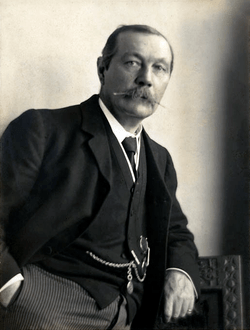
So, during his training, Doyle, having already written a number of short stories, was sent to Birmingham to gain first hand experience in general practice. He lodged at Clifton House, 96 Aston Road North, at the time that Birmingham was becoming the “workshop of the world” under governance of Joseph Chamberlain.
In those days “house calls” were far more common than they are today and Doyle frequently made visits to the area around Hurst Street. He was taken by the name of one of the streets lined with rows of terraced and back to back houses – Sherlock Street. The die was cast and Doyle had a name for his fictional detective character “Sherlock Holmes“. In fact it makes you wonder if he found out that the area had, hundreds of years before, been called Holme Park! Doyle adopted “Conan” to insert as a second surname, and eventually he abandoned the medical profession as he became a successful and prolific writer.
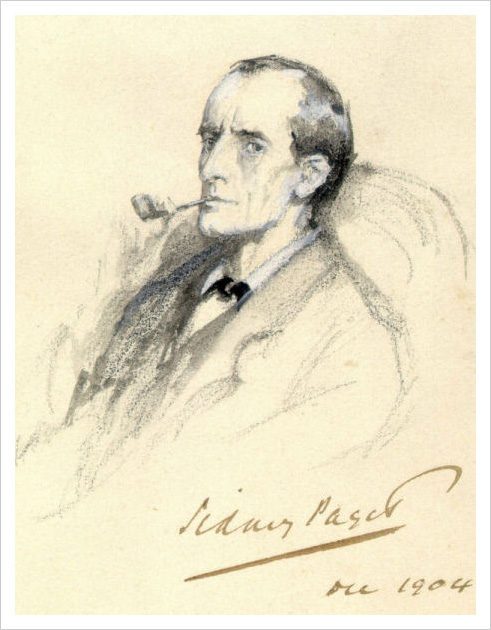
In 1902 King Edward VII knighted Conan Doyle for services rendered to the Crown during the Boer War. It is said that the King was such an avid Sherlock Holmes reader that he had put the author’s name on his Honours List to encourage him to write new stories. Sir Arthur Conan Doyle continued to write up until 1928 and passed away two years later at his home in Crowborough in east Sussex.
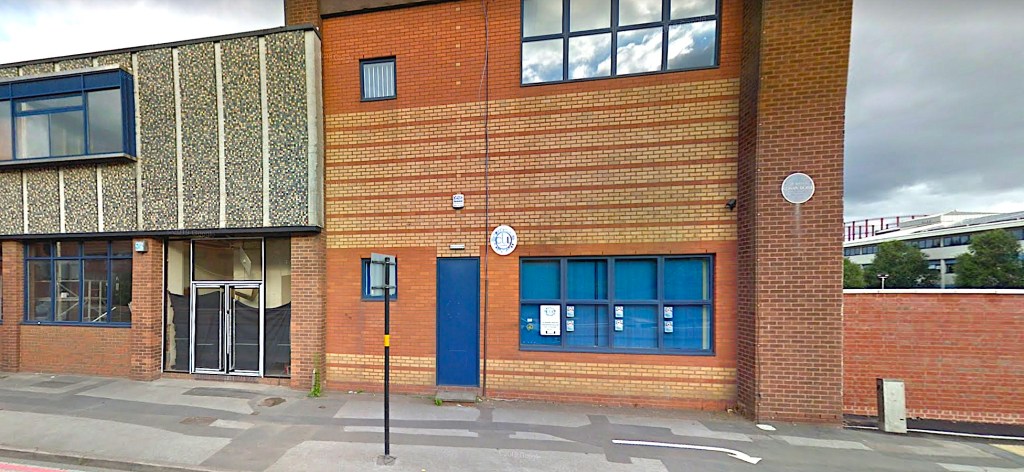
Clifton House in Aston Road North is now long gone, but a blue plaque, erected by the civic society, commemorates the author’s residence.
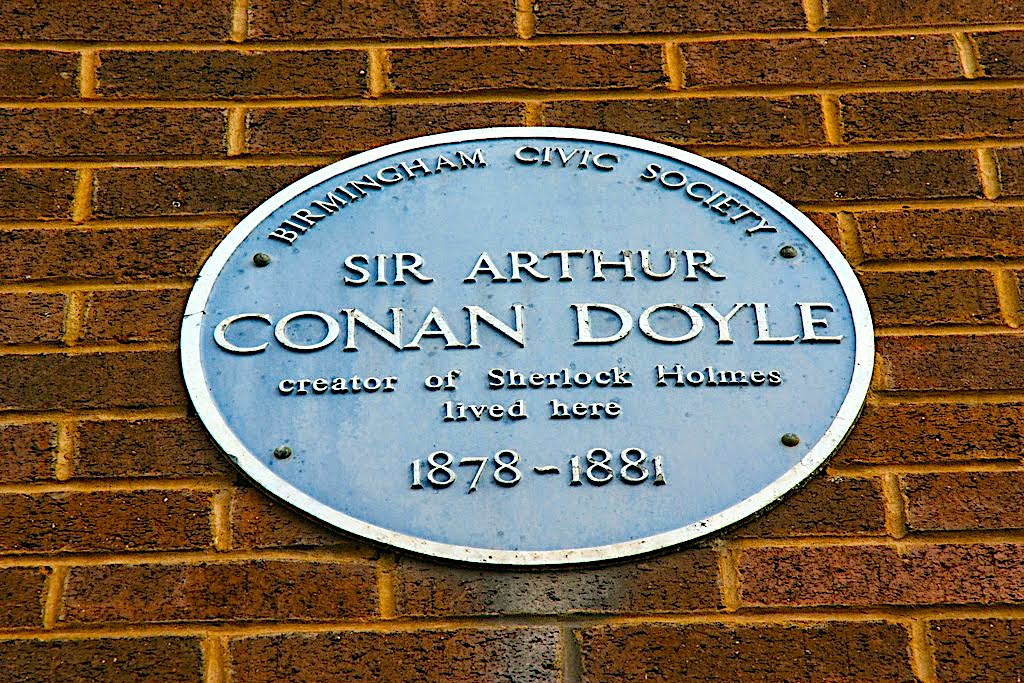
Conan Doyle once said “If in one hundred years I am only known as the man who invented Sherlock Holmes, then I will have considered my life a failure.”
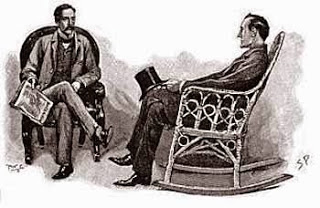
But the Birmingham connection with Sherlock Holmes does not end there. Of all of Conan Doyle’s “Sherlock” stories “The Hound of the Baskervilles” is probably one of the best known. It tells the story of an attempted murder inspired by the legend of a fearsome, diabolical hound of supernatural origin. But who was Baskerville? This was probably John Baskerville who was a Birmingham businessman, in areas including japanning and papier-mâché, but he is best remembered as a printer and type designer. His date of birth is unknown, but he was baptised on the 28th of January 1707, and died on 8th of January 1775. He lived at his house in Easy Row which was where Paradise Circus is today. He is known the world over for the “Baskerville” font which he designed in the 1750s.

In 1757, Baskerville published a remarkable quarto edition of Virgil on wove paper, using his own type. It took three years to complete, but it made such an impact that he was appointed printer to the University Cambridge the following year.
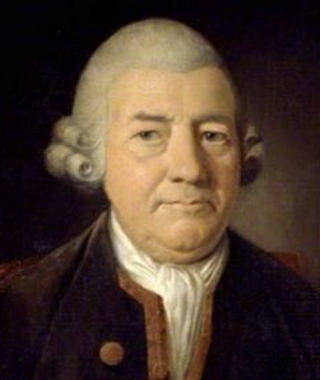
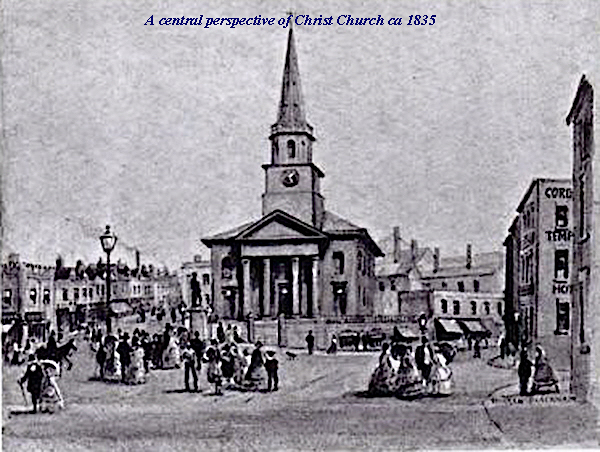
Baskerville was an atheist and insisted that upon his death, he was to be buried standing up in a conical tomb in the back garden of his house. However following his “burial” the house was demolished to make way for canal wharfs, so his body was moved to the crypt under Christ Church which stood where Victoria Square now is. BUT, Christ Church was demolished around 1897 so his remains moved again and ended up in Warstone Lane Cemetery (but not standing up!).
During the 1930s, Birmingham City Council produced a grand scheme to create a “Civic Centre” off Broad Street which incorporated the site of the disused canal wharves and the Hall of Memory which had already been built in 1925.
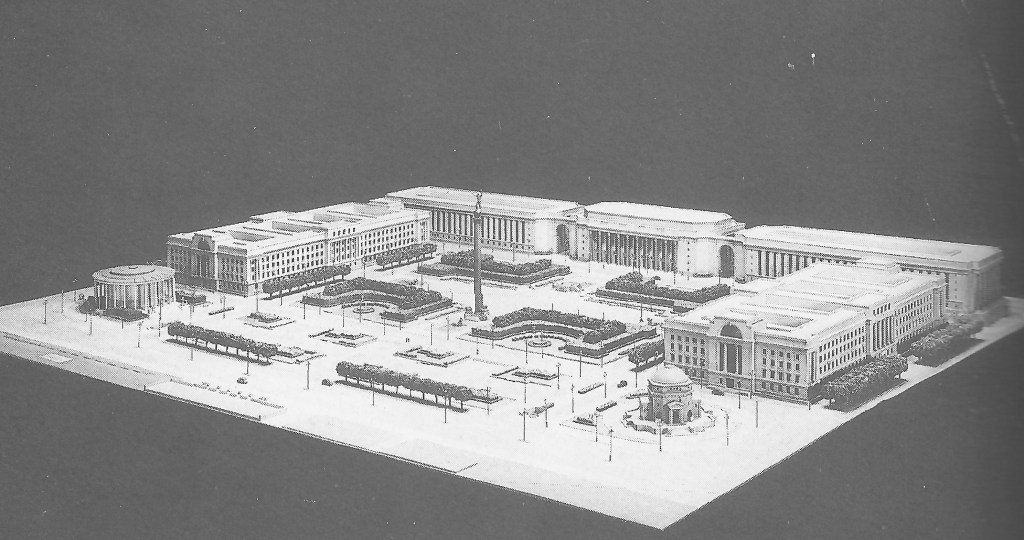
In 1938 the first part of the scheme was built and we can see this today – Baskerville House in Centenary Square. (Only half of the building was completed – take a look at the rear of the building – it’s faced with brick – not the marble panels covering the rest of the building). The rest of the scheme was never finished due to the interruption of WW2 – the rest of the site is now home to The Library of Birmingham, The REP, and the ICC. A sculpture of the Baskerville typeface, in honour of John Baskerville, made out of Portland stone and bronze, stands outside the main entrance to Baskerville House in Centenary Square since 1990. The letters spell out Virgil, the name of the Roman poet whose works were printed by Baskerville, in his typeface, in 1757.
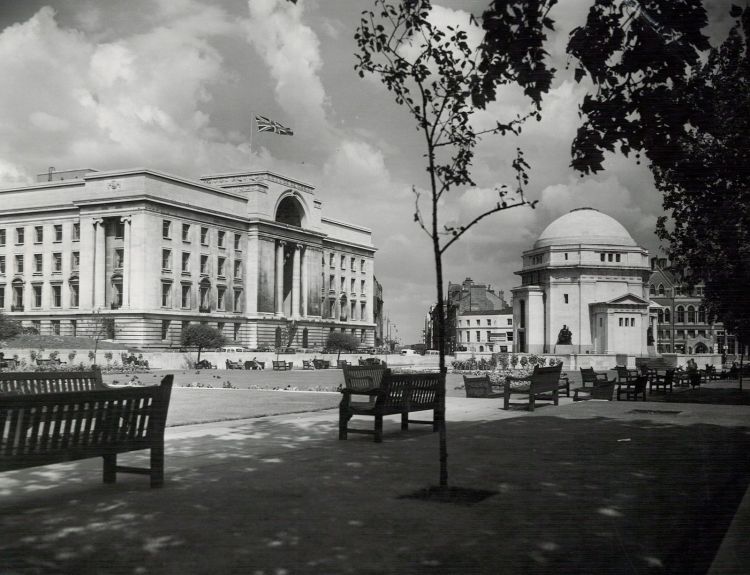
Baskerville House 1961 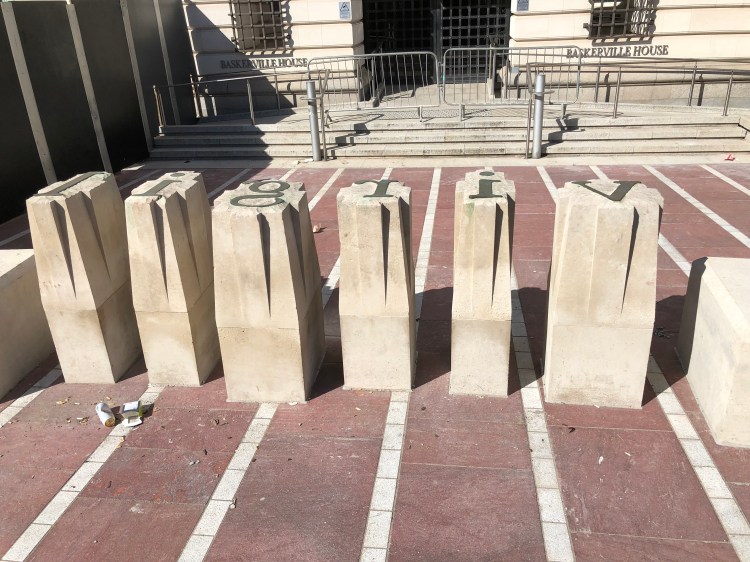
Virgil Statue
 hurst-street.com