
Peaky Blinders
No account of 19th century Birmingham would be complete without a reference to the “Peaky Blinders”. So here’s ours! The TV series “Peaky Blinders” sets the story in the years following the Great War. But the truth is quite different, although we should make allowances for “artistic licence”.
The Stag and Pheasant pub (now long gone) on the corner of Bromsgrove Street and Pershore Street, which was just over 100 yards away from Hurst Street was the site of a set-to in 1895 where two police officers were attacked, trying to eject a gang of “Peaky Blinders” from the pub. This report has been adapted from Carl Chinn’s book “The Real Peaky Blinders”.
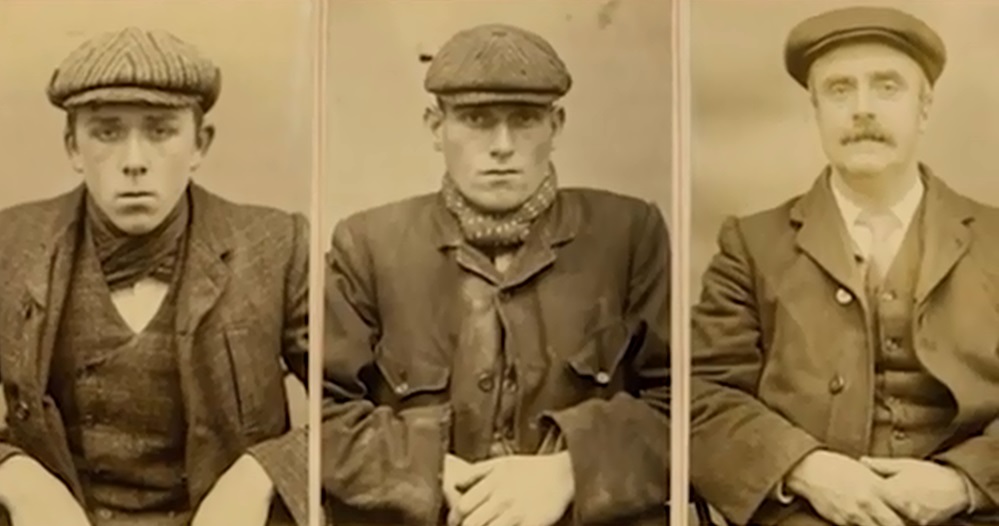
In 1895, the two police constables were called to turn out a gang of between 20 and 30 “peaky blinders” from the Stag and Pheasant on the corner of Bromsgrove Street and Pershore Street. Once outside they caused another disturbance and one of them called Warner assaulted the policemen, who took hold of him to take him into custody. Thereupon the gang “commenced to kick and beat them”. James Cuson, aged 28, then kicked Police Constable Bennett in the stomach and he released Warner. The two men were later arrested.
Amongst the weapons of choice were life preservers – a short, weighted club like a small truncheon or cosh. On Thursday, June 27, 1895, the Manchester Evening News carried the headline “Birmingham Slogging Gangs”. It reported that the Birmingham Recorder had passed sentences of six months imprisonment “…. on two men for maltreating a third with loaded life preservers and fire irons. They were members of rival gangs of “Peaky Blinders” who stand at street corners to assault passers-by, or get up fights with rival gangs.”
The term “Slogging Gangs” had been coined before “Peaky Blinders” to describe the hard working, hard fighting gangs that used large metal belt buckles and “life preservers” to beat the living daylights out of their victims.
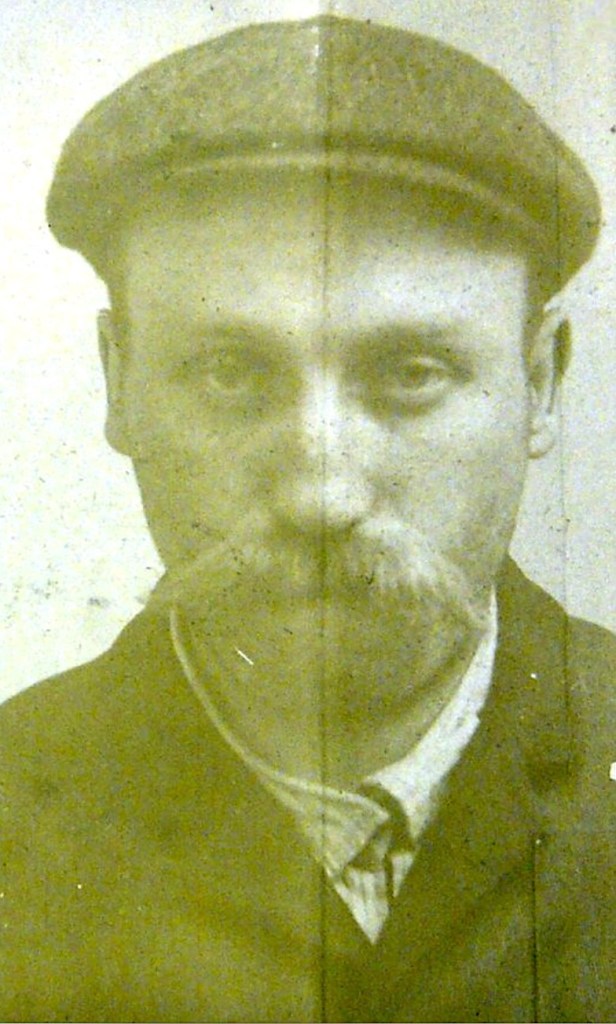
In reality, these peaky blinders took their name from the peaks of the flat caps that they wore. Flat caps with stiff peaks became popular with working-class men and teenage boys from the late 1880s. Before then the billycock, a type of bowler hat, was the preferred form of headgear, as was made plain in the Post on Tuesday, May 19, 1891. An older man was found dead in the canal at Saltley. It was explained that he “evidently belonged to the working-classes” as he wore a dark blue serge suit, cord trousers, lace-up boots, and billycock hat.
By the mid 1890s, however, the billycock was rapidly dropping out of favour with younger working-class men and thereafter it is mentioned rarely in the newspapers. The fashion for flat caps with peaks was quickly adopted by the members of street gangs in Birmingham and led to the name of the peaky blinders. This derivation of the name is reinforced by the term peakies that was occasionally used for ruffians in Birmingham, as it was in the Post on Thursday, January 18, 1900.
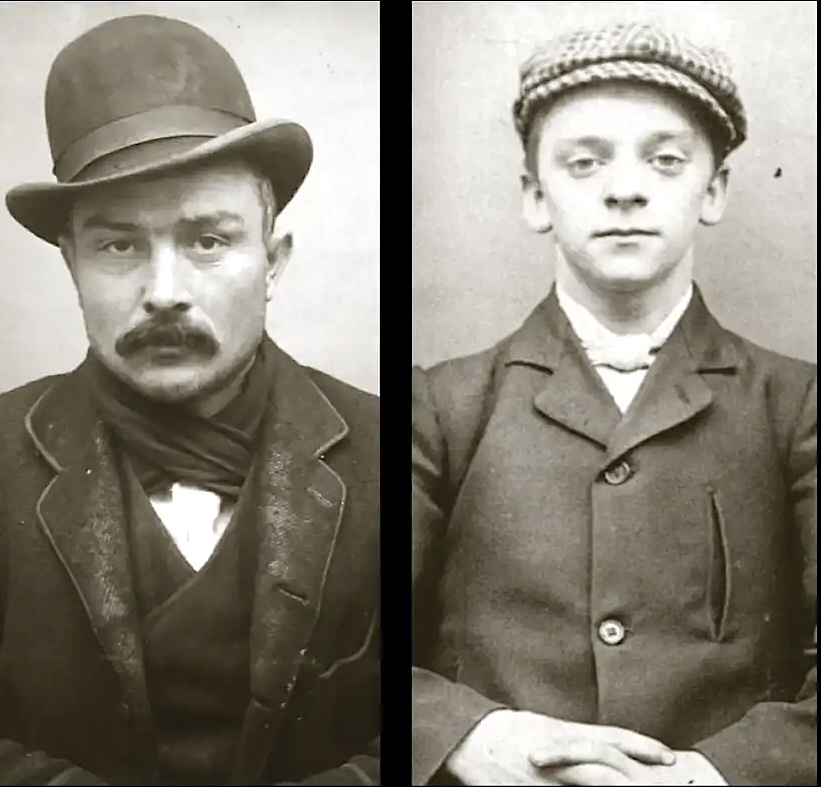
It seems that it was an urban myth that the flat caps the “Peaky Blinders” wore had sharpened coins of razor blades sewn into the peaks. The theory was that the cap was used as a weapon by striking it across the victim’s eyes or face. In spite of this being a great yarn, the practicalities meant it was almost impossible to use a flat cap this way. It is most likely that the term referred to the fact that the peak of the cap was pulled down over the eyes to make identification difficult.
So, when did the term first appear? Well, it appears that an attack on a George Eastwood by a gang on Saturday, March 23, 1890 was so vicious that the Birmingham Daily Post condemned it as a “Murderous Assault”. Living in a back house in Arthur Street in Small Heath, that fateful day George had gone for a drink in the Rainbow pub in Adderley Street on the High Street in Deritend. It was his misfortune that Thomas Mucklow was also there with his bully mates.

A teetotaller, young George had ordered a ginger beer. That inoffensive act was mocked by the gang. They chaffed him for his principles and, according to the Post, “…. from words they came to blows and ultimately all left the public-house”. Outnumbered and not wanting any trouble, George headed off down Adderley Street towards his home. He had only gone a few yards and was just under the blue-brick railway arches when Mucklow struck his innocent victim a violent blow. George Eastwood fell down and “….. it is supposed that his head struck the kerbstone, with the result that his skull was fractured. Whilst he was on the ground, he was kicked and hit with the buckle of a belt by Mucklow’s cowardly mates.”
Somehow George managed to get to his feet and chased by the gang, he ran to his left, down Lower Trinity Street. He must have been in fear of his life and with the strength of someone fighting to survive he clambered up the wall of Allcock Street School and crossed the playground into Allcock Street itself. Desperate for safety, George must have banged on the door of the house of a Mr Turner who kindly gave refuge to the poor man despite the threats of Mucklow and his gang who were shouting outside.
Later that night, George Eastwood was taken “in a dangerous condition” to the Queen’s Hospital in Bath Row. In addition to “serious bodily contusions, his head was fractured and his scalp cut in two or three places”. The injury to his head was so bad that it “necessitated the operation of trepanning” – the drilling of a hole into his head; and George had to spend over three weeks in hospital before he was allowed home.
Thomas Mucklow, a carter who lived in Adderley Street, was the only one of the gang who was identified and arrested by the police. Although he called upon good character witnesses, he was found guilty and sentenced to nine months’ hard labour after the prosecution had declared that Mucklow had struck without provocation and had encouraged the others in the gang to beat their victim.
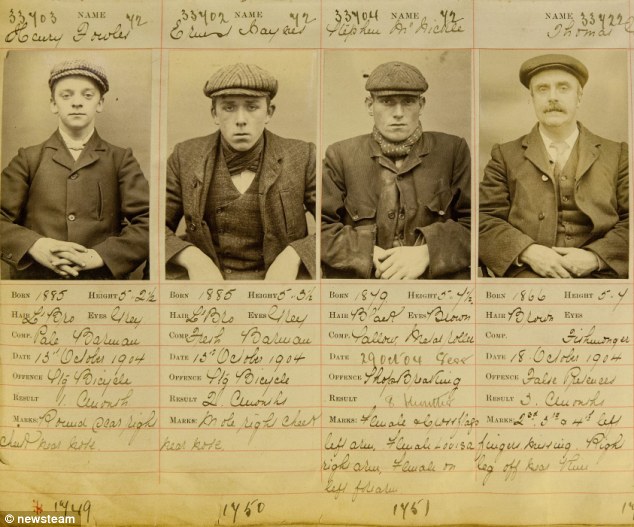
Almost two weeks after the dastardly attack on George Eastwood, it was brought to the notice of the readers of the London Daily News. On April 9, it highlighted a letter by a Birmingham inhabitant to a local newspaper. This person stated that the “murderous assault” had been committed by members of the Small Heath “Peaky Blinders”‘.
 hurst-street.com