
Hurst Street & Birmingham’s Chinese Communities
Chinese workers arrived in Birmingham during the First World War to work in the factories, many of whom remained to form a small but distinctive community in the city. The first Chinese restaurant in Birmingham, The Tong Kung, opened at Holloway Head in 1956.
In 1917 there were approximately 250 Chinese men working in the munition factories, they were doing heavy and dirty work in the metal trade for which local workers could not be obtained. With the end of the First World War these Chinese workers drifted away probably into dock work at the ports. In the 2011 Census the Chinese population of Birmingham was given at slightly under 13,000.
After the war a small concentration of Chinese people living in central Birmingham was provided for by Chinese shops and services south and west of the Bull Ring in the Hurst Street area.
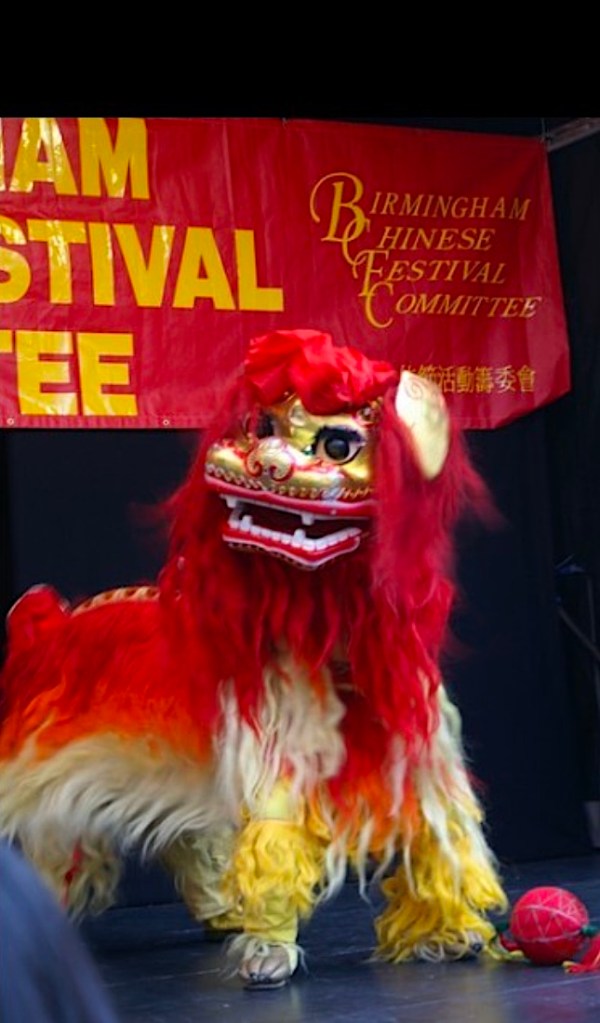
Chinese Dragon 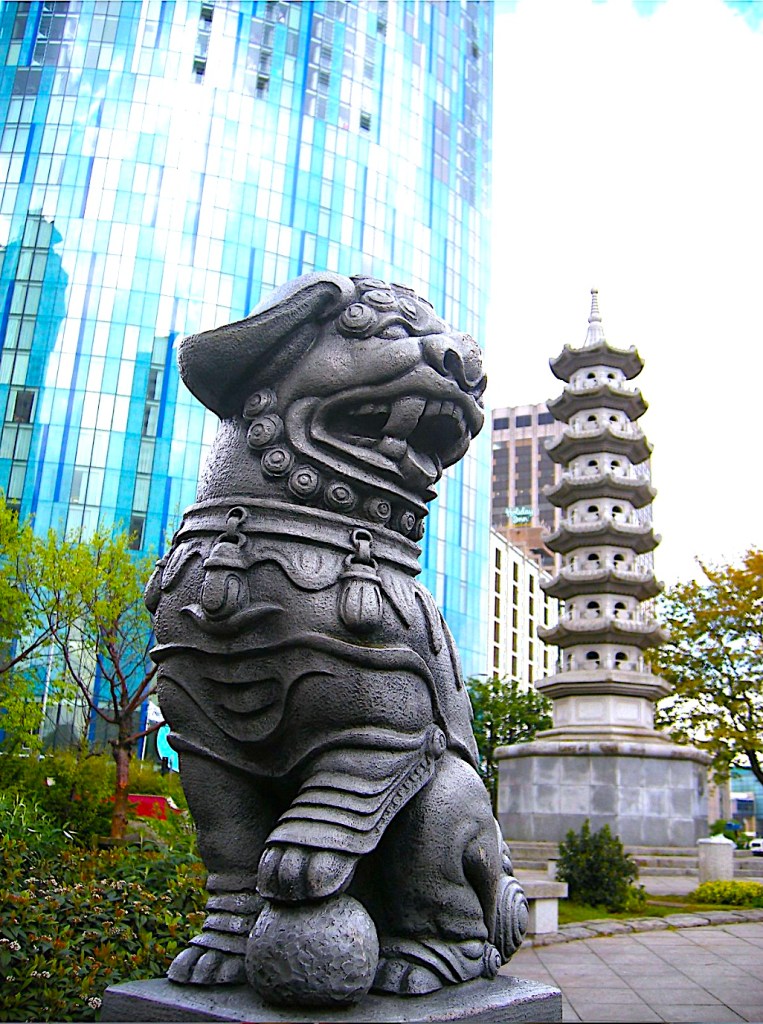
Guard dog & Pagoda – Holloway Circus
The foundations of the modern Chinese community in Birmingham were laid in the 1950’s by Cantonese and Hakka speakers, many of whom were from farming communities such as Yuen Long in the New Territories of Hong Kong. In Birmingham they were unable to find work in their previous occupations and so they often opened restaurants and takeaways. Working as teams of husbands and wives or brothers, they then began to employ staff from their villages in a chain migration similar to that of the Italians. Competition led to many families moving out of the city centre to open suburban takeaways. With unpaid family labour and living directly above the shops, their running costs were at least two-thirds those of other restaurants.
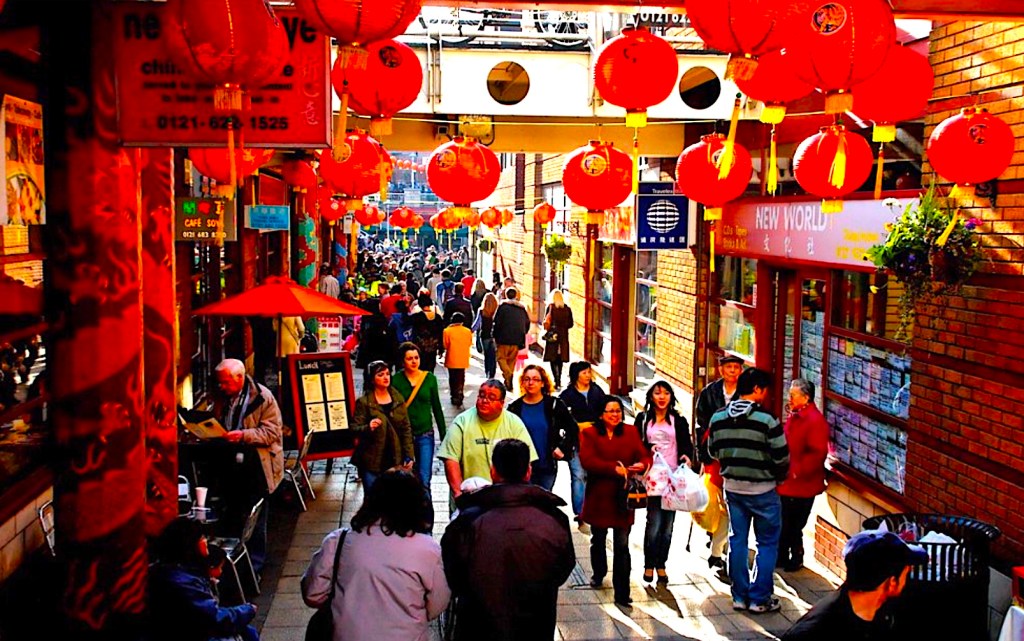
The area around Hurst Street was developed as the Chinese Quarter from the 1970s and since the late 1980’s a vibrant Chinatown has grown there. During the 1980s more people from Hong Kong began to arrive, fearful of the impending Chinese takeover in 1997.
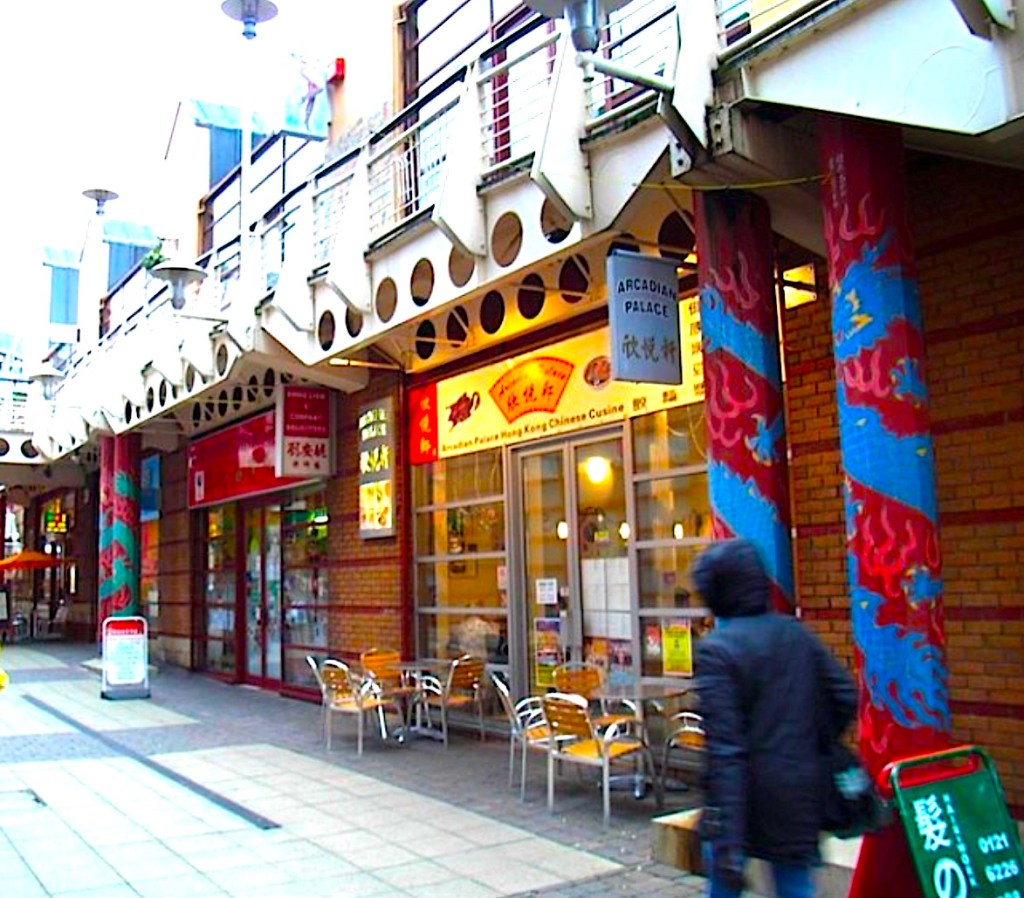
During the 1990s moves were made to push the city’s commercial centre beyond the Inner Ring Road (here at Smallbrook Queensway). The Arcadian Centre was built between Hurst Street and Pershore Street in the late 1990s with a deliberate Chinese emphasis. There are many Chinese restaurants, supermarkets and shops in the area, which hosts an annual parade and festivities celebrating the Chinese New Year, a movable feast which may occur from late January to mid-February.
Since the 1990s there has been a sharp rise in the number of Mandarin speakers from mainland China, who now outnumber the Hong Kong Chinese. The Malaysian-Chinese are also prominent in Birmingham. English is their first language, many are from middle -class backgrounds and most are qualified professionals, or running their own businesses. By contrast, the Chinese from Vietnam have faced a variety of difficulties. Forced from their country by the Sino-Vietnamese border war of 1979, initially they settled in Sparkbrook, especially in Braithwaite Road, which was nicknamed “Chinese Street” – Tang Yahan Gaai.
This migration was the catalyst for the establishment of the Chinese Community Centre in nearby Bradford Street which provided advice and advocacy services to the non-English speaking newcomers and which continues to work for the benefit of Birmingham’s Chinese population.
The Chinese Pagoda is a landmark in the centre of Birmingham. It is 40 foot (12m) granite carving of a Chinese pagoda, carved in Fuijan, China. It was donated to the city by Wing Yip, founder of a local Chinese supermarket chain, as thanks to the city and its people for providing a home for them and their families, and for the city’s support over the years. Wing Yip, with just ten pounds in his pocket arrived from Hong Kong in 1951 by boat. He opened a Chinese restaurant at Clacton-on-Sea, moving to Birmingham to open a Chinese grocer’s shop in Digbeth supplying genuine Chinese products to restaurants and to Chinese families. The business moved to Coventry Street where it stayed for seventeen years until in 1992, Wing Yip moved to large purpose built premises in Nechells
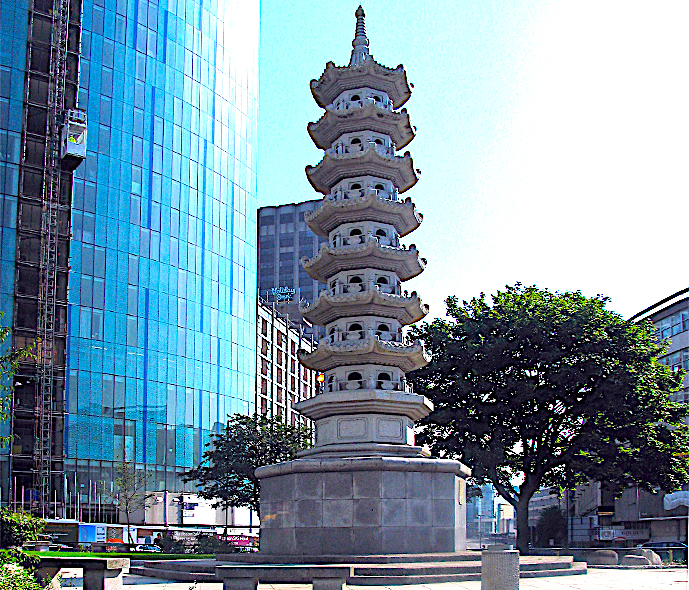
The Pagoda was erected in 1998 and the surrounding area turned into a Feng Shui garden with a large Taijitu embedded in the pavement. It is located in the centre of Holloway Circus Roundabout on the Inner Ring Road, it forms a landmark for the nearby Chinese Quarter of the City.
 hurst-street.com