
The Lady Well
The regular flow provided by Birmingham springs and wells provided sufficient water supply for both domestic and industrial purposes until the mid nineteenth century. The main public wells were one at the north end of Digbeth, very near St Martins churchyard, believed to have been called Holy well, and another near the old parsonage between Smallbrook Street and Bromsgrove Street, at Ladywell. Probably formerly dedicated to the Virgin Mary and fed by two springs. Together they were said to be “….so extensive and powerful, that it is stated to be sufficient for the supplying for the city of London with water”
In 1885 it was said that, “Numerous people find their advantage in conveying that useful article (soft water) in carts and innumerable others in carrying it with a yoke and two buckets, to those who want it, which they sell at the rate from ten to twelve gallons for one penny, according to the distance.”
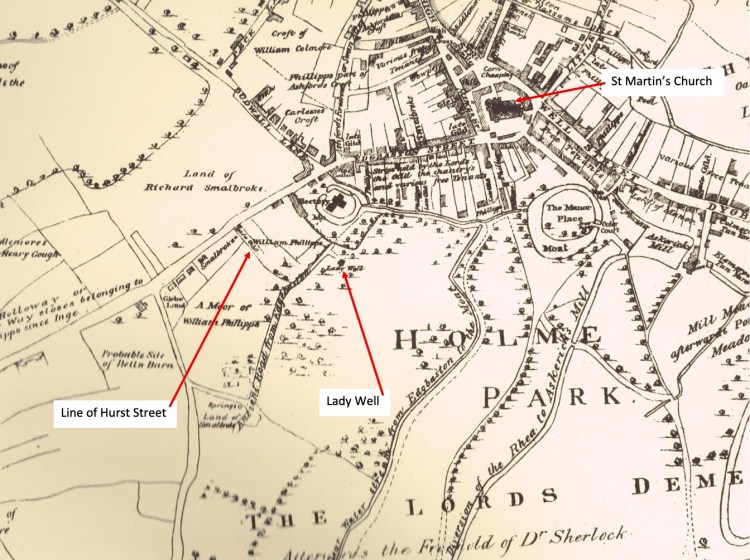
Lady Well lay on the northern edge of Holme Park, which was the demise of the de Birmingham family, part of the Lord’s demesne. On 4th October 1539 John Dudley, the Earl of Warwick, leased the “ ryvers, strames, springs and watercourses to William Askereyec. The land to the north- west of Ladywell between the Holme Park and Smallbrook Street was owned by William Phillips (whose property later belonged to the Inge family).
On 9th April 1557 Phillip and Mary granted the “lordship” or foreign manor and borough of Birmingham, including the Holme Park to Thomas Marrow. About the year 1730 Bishop Sherlock bought a large tract of land in Birmingham including Holme Park from the Marrow family, but would not allow any building. Bishop Sherlock died in 1761. A Private Act was passed in 1766 to allow Sir Thomas Gooch successor to the Sherlock estate, to grant building leases of from 21 to 120 years. On 21 January 1785 Gooch leased the Lady- well area to a merchant, William Humphrys.
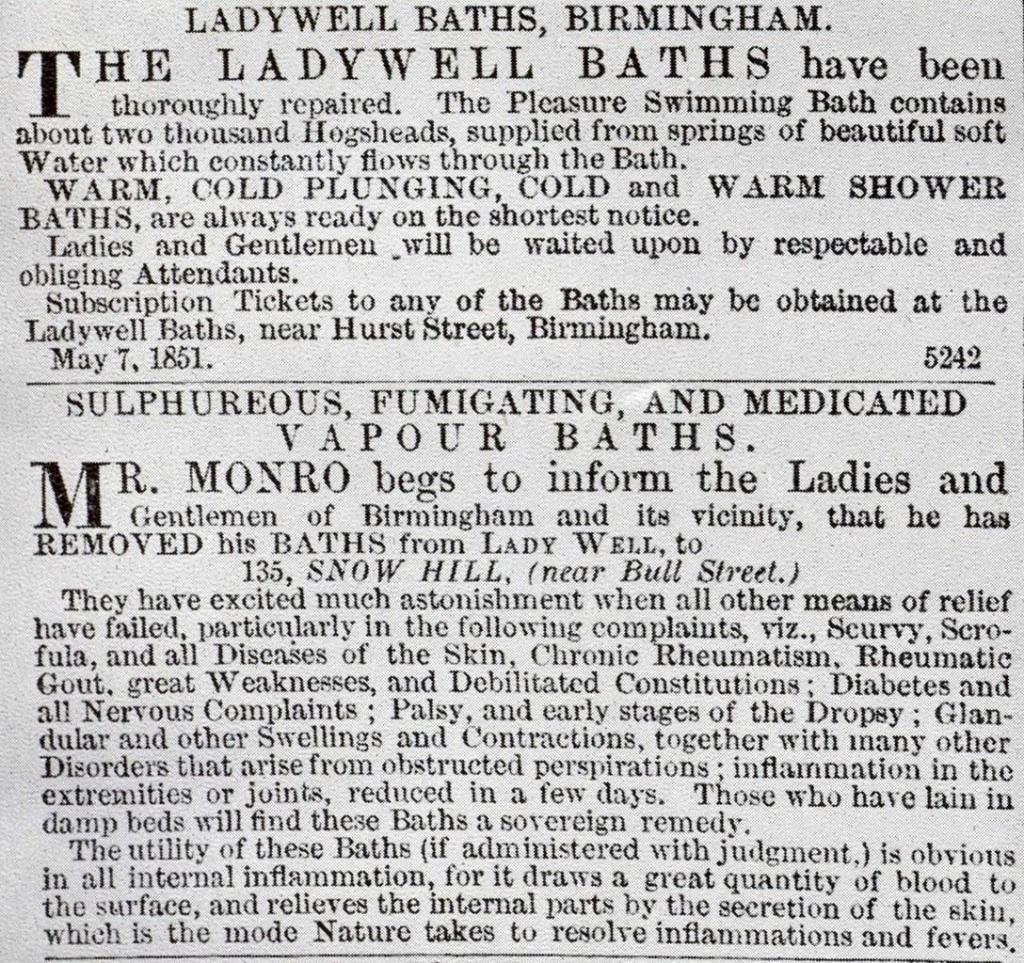
Ladywell had always been considered by Birmingham townspeople to be an ancient public well. At some time between 1750 and 1778 the development of the associated with Ladywell Baths meant that the well itself was partially surrounded by buildings with access remaining from a passageway off Ladywell Walk.
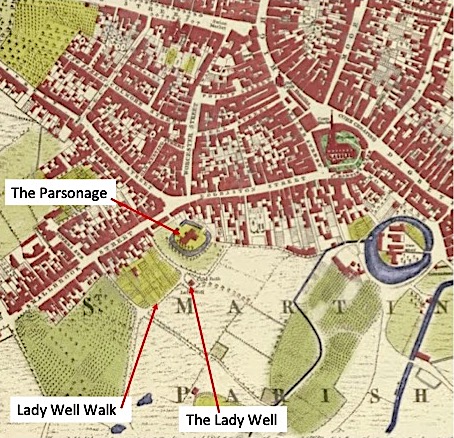
In July 1818, the proprietor proposed that the well would be closed to the public, possibly to improve the baths, and needless to say the water carriers remonstrated loudly. At the meeting of inhabitants of the town on 10th August, the water carriers, aided by the Birmingham Street Commissioners prevented the closure.
The appointment of Dr Alfred Hill as Medical Officer of Health in 1872, after the Public Health Act that year resulted in the institution of a “sanitary census”. It was found that 24,000 households depended on corrupted wells for their water supply. After 1876, the Corporation Health committee, under the powers granted to them by the Public Health Act (1875), began the compulsory closure of polluted wells. Some 295 were closed during the first year and by 1880’s over 3,000 had been closed, including the Lady Well .
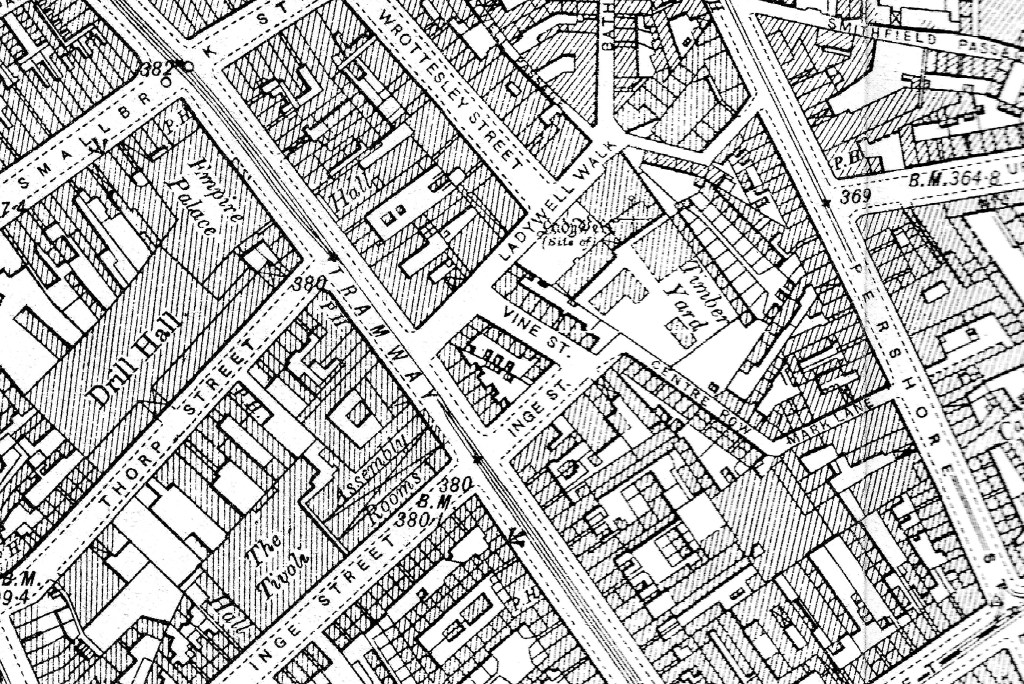
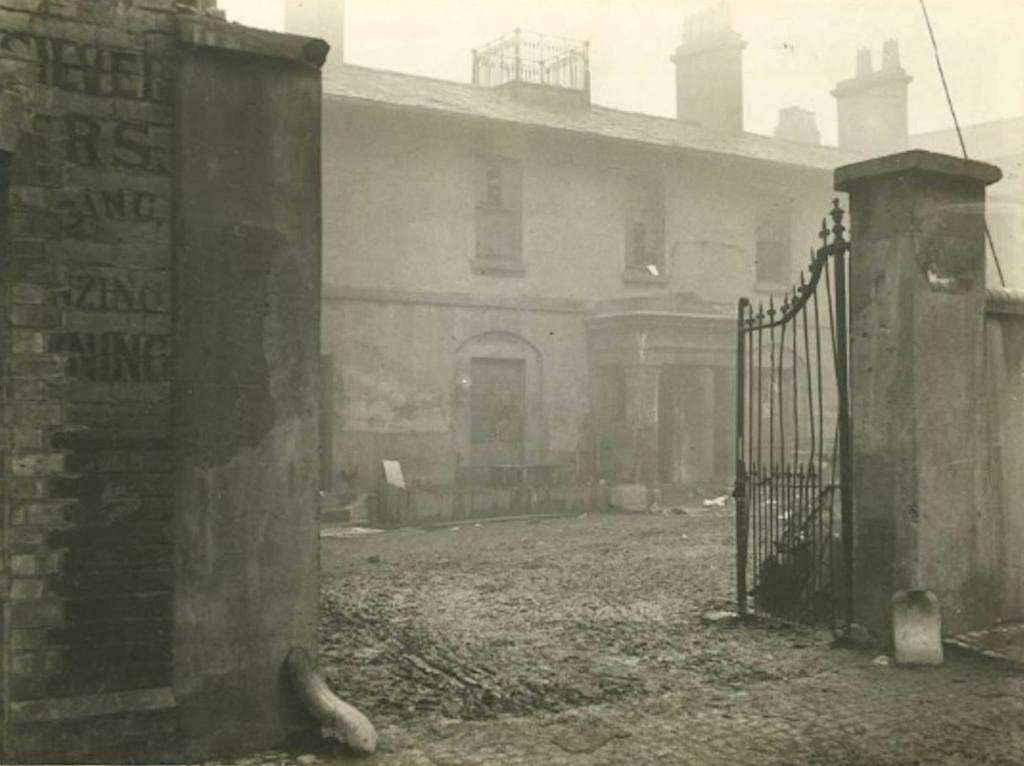
This 1902 map shows the site of Lady Well and the new occupant of the site, a timber yard. Thomas Ashford Turner, timber merchant occupied the site until 1910. The same building still occupied the site in 1913, but by 1938 the area had been cleared.



 hurst-street.com