
Smallbrook Queensway
Smallbrook Queensway was originally called Smallbrook Street named after the Smalbroke family.
Richard Smalbroke made a big impact on sixteenth century Birmingham. He owned land in Yardley and sold cloth, spices, groceries and metal goods in Birmingham. In 1536 King Henry VIII took away most of the land which belonged to the Church and sold it to wealthy individuals. Smalbroke acquired some of the Church’s property in the town, including the Old Crown in Deritend. He also became one of the first governors of Edward VI Grammar School, which was built in New Street. Richard’s son also called Richard, was rich enough to build Blakesley Hall in Yardley in 1590. It was a large modern house with fireplaces, brick chimneys and glass in the windows.
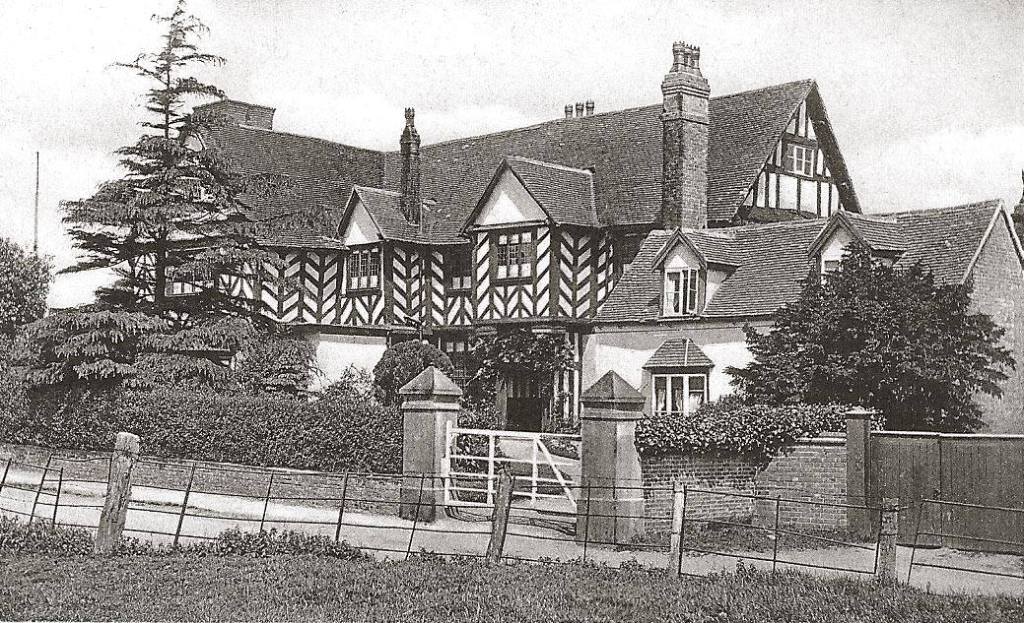
Barbara Smalbroke (1593-1679) was the daughter of Robert Smalbroke, the son of the second Richard Smalbroke. Her father died when she was ten and she inherited Blakesley Hall in 1613 on the death of her grandfather. A prosperous woman, she was married twice to the sons of local landowners. Her first husband died after two years of marriage but in 1620 Barbra married Aylmer Foliot of Perton Court in Pershore, with whom she had fourteen children.
By 1959 work was underway to build what was to be called Smallbrook Ringway, now Smallbrook Queensway. All the premises in Smallbrook Street were razed to the ground and Birmingham was to look FORWARD to a brave new post-war future. It was part of a city ring-road (The Ringway) which was masterminded by Herbert Manzoni, who held the position of City Engineer and Surveyor of Birmingham from 1935 until 1963.

An Act of Parliament permitting construction was passed in 1946. Due to financial controls, the first part of the ring road, Smallbrook Ringway, did not begin construction until 1957 and was completed in 1960.
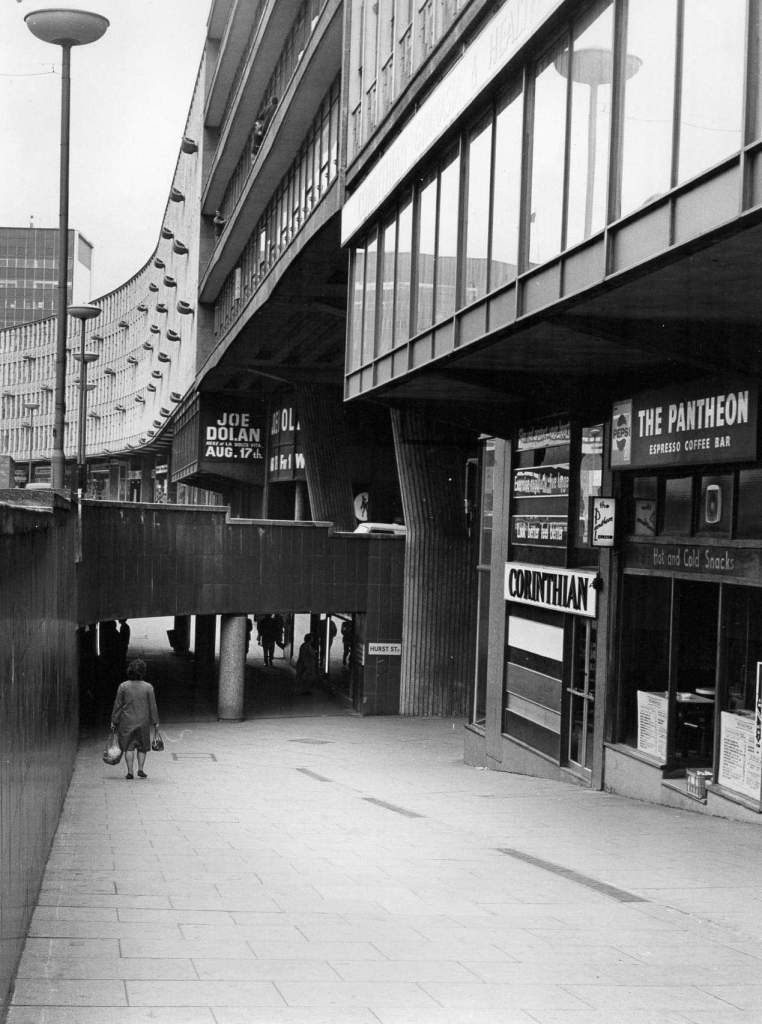
The car was king and the car went on top at the junction between Smallbrook Ringway, Hurst Street and Hill Street. Pedestrians went underground through a network of subways – out of sight and out of mind.
Now, Queensway is the name of a number of roads in central Birmingham, specifically those that form the A4400 Inner Ring Road. The name was originally to refer to the Great Charles Street Queensway Tunnel, part of the A38. In April 1971 the Queen was called upon to officially open the “Queensway Tunnel” running from Suffolk Street to Great Charles Street. The ceremony was performed following a tour of the new “Ringway” which evidently impressed the Monarch so much that she went on the name the entire ring road as the “Queensway” not just the tunnel! This was followed by a frantic changing of maps and road signs!

The Queensway was built as dual carriageway major roads in the 1960’s and 1970’s. However in recent years many have been rebuilt and downgraded and some now resemble city streets. A good example of this was the removal of the dingy pedestrian subway that linked Hurst Street with Hill Street under Smallbrook Queensway.
These redevelopments were championed by the City Council as breaking the “concrete collar” around the City centre with the aim of making the City more friendly for pedestrians and improving the appearance of the City.
So, all changed in the early 21st century when the subways were removed and a new junction created at a lower level.

1959 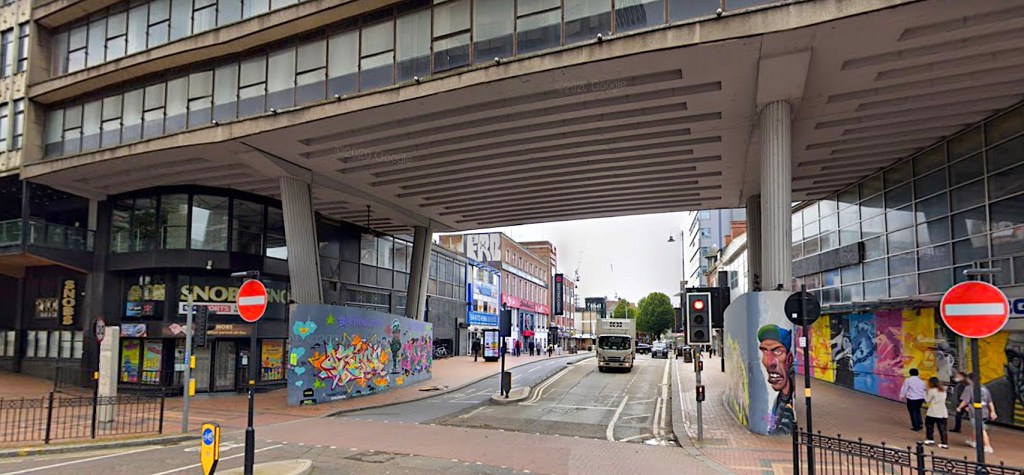
2020
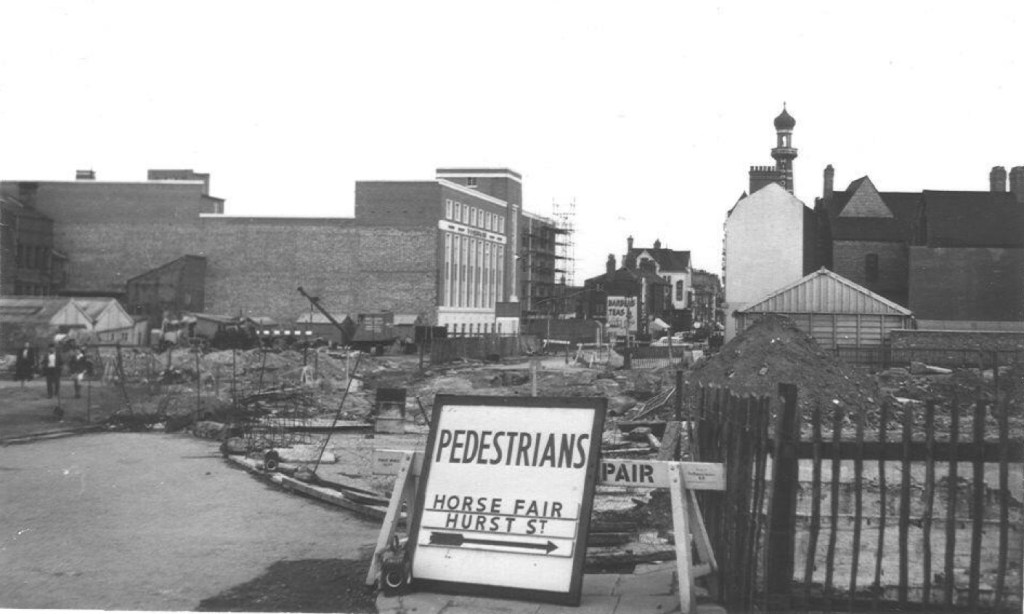
The first photograph below shows the temporary shops built on the site of the Empire Theatre at the junction with Hurst Street, when the construction of Smallbrook Ringway (Queensway) started in the late 1950s where Smallbrook Street once was. St Judes Chapel in Hill Street can be seen in the distance.
Next is the view at about the same time looking down Hurst Street with a sign predicting the difficulty that endure for years for pedestrians attempting to get from Hill Street to Hurst Street.
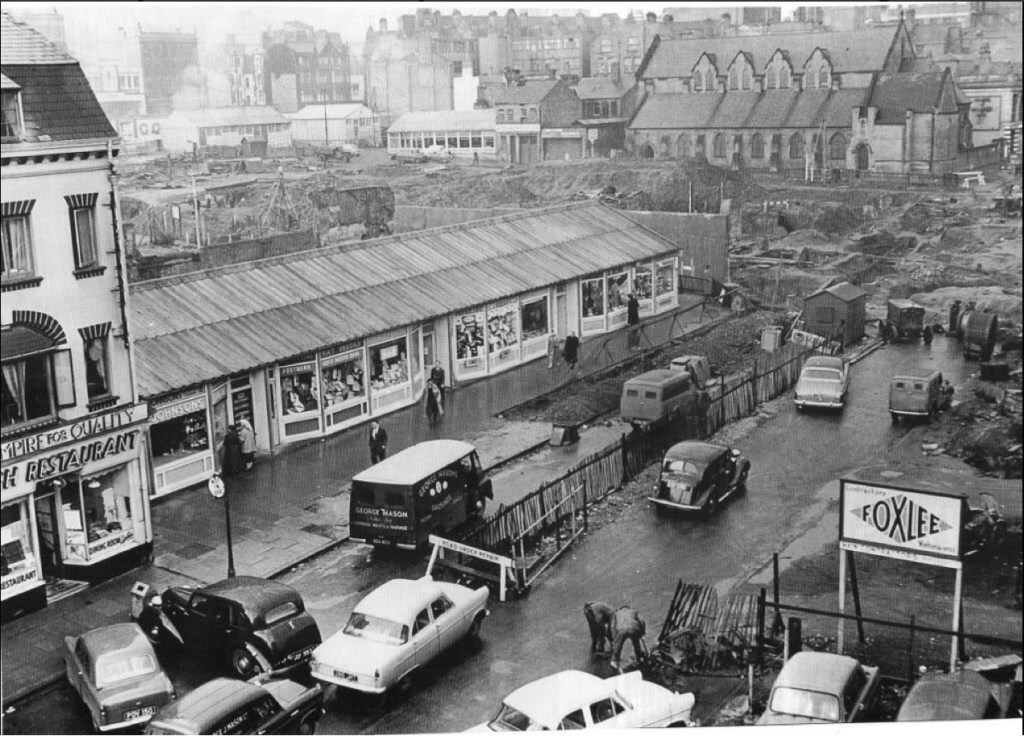
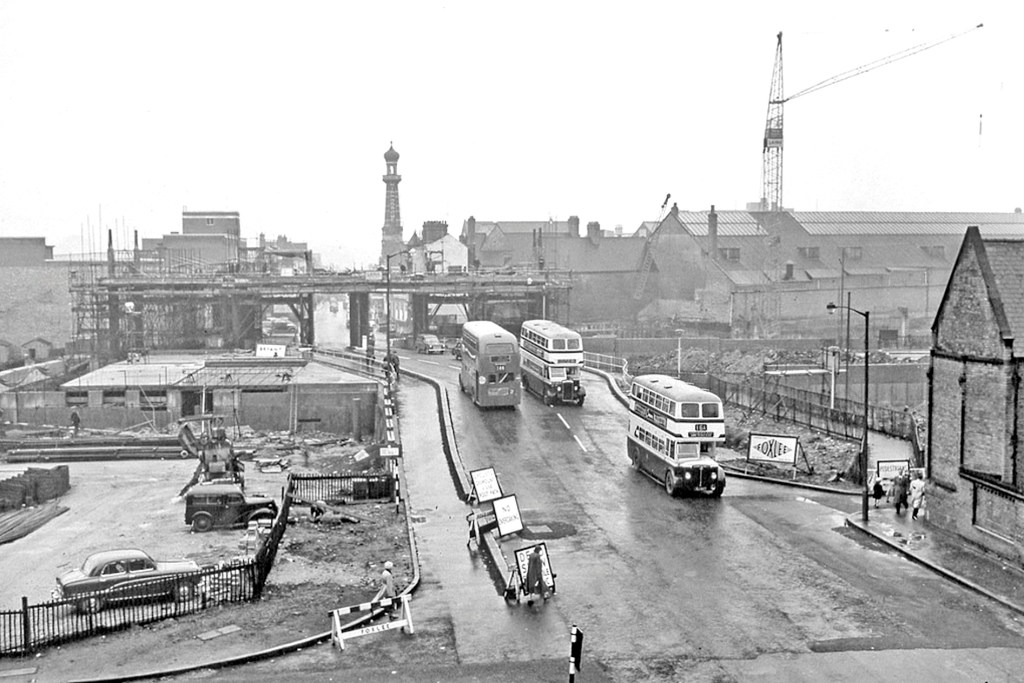
This view from Hill Street shows that work to reconnect to Hurst Street has been completed and that the bridge is, by now in 1959, under construction. Then we can see floors being added to the bridge to form part of the building that would line the whole length of the south side of Smallbrook Ringway.

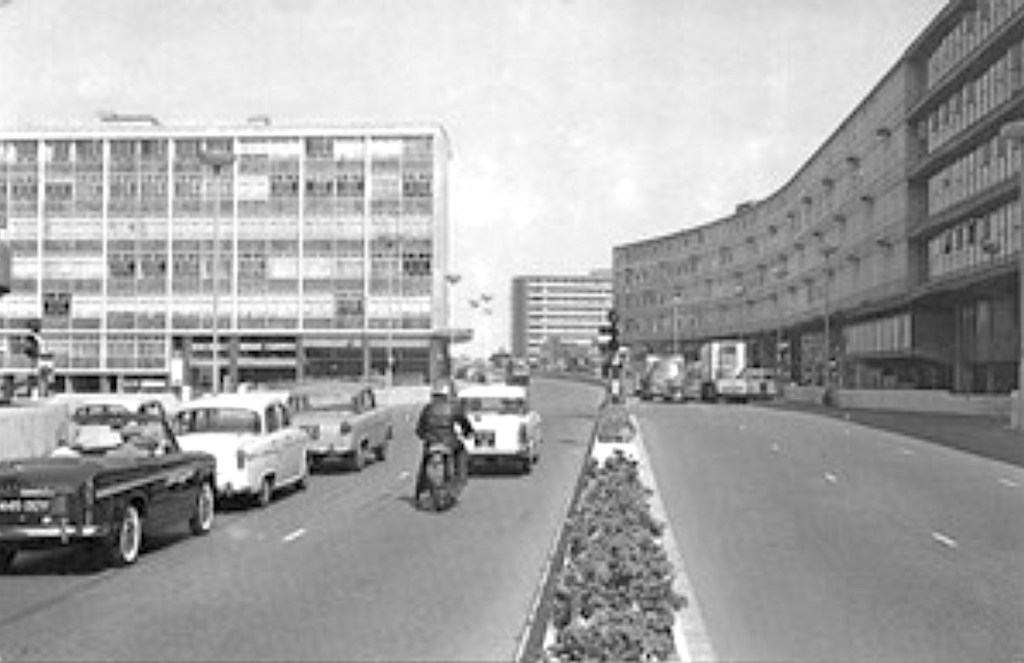
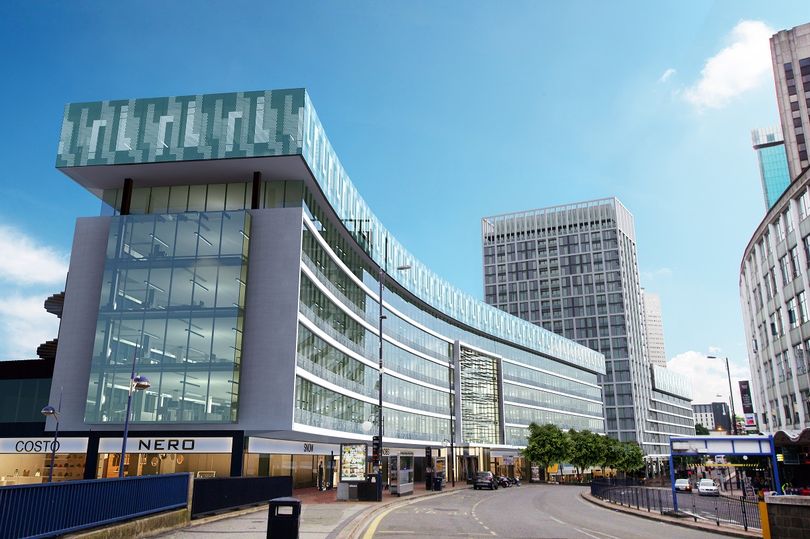
By the early 1960s Smallbrook Ringway, renamed Smallbrook Queensway ten years later, is complete and traffic is making its way from Suffolk Street to the Bull Ring. Then finally the the iconic Smallbrook Queensway facade was completed. This, at over 1,000 feet, was said to be the longest building frontage in Europe, but now it is in desperate need to some care and attention. The attractive uplighters have not worked for a number of years and plans are afoot to refurbish all or part of the building. Hence, by 2020, the pavement is lined with the boarded up shop fronts seen here as tenants left the building at the end of their current leases.

We are now going to set off down the east side of Hurst Street and the first building on the corner of Smallbrook Street is SNOBS Night Club.
 hurst-street.com