
The Empire Theatre
Having passed The Maharaja Indian Restaurant and the Dixie Chicken fast food cafe in Hurst Street on the corner of Thorp Street we can find the location of our next lost building.
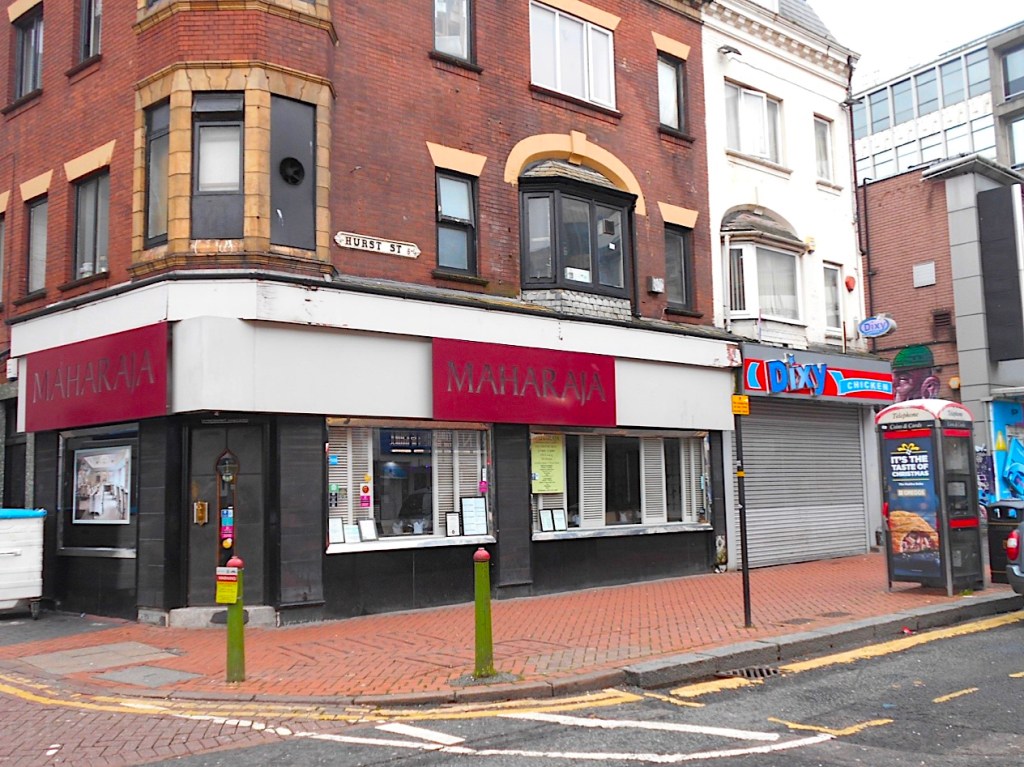
Formerly – Day’s Crystal Palace / New Empire Palace of Varieties / Empire Palace / Birmingham Empire
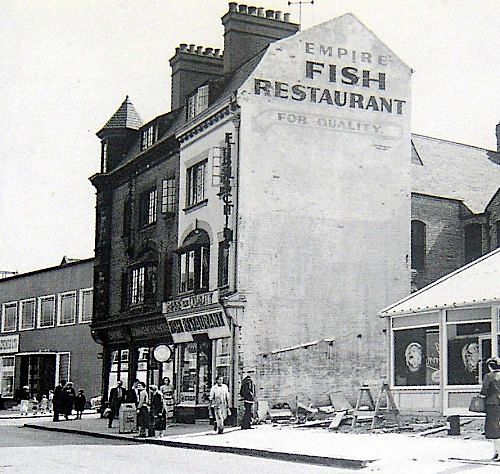
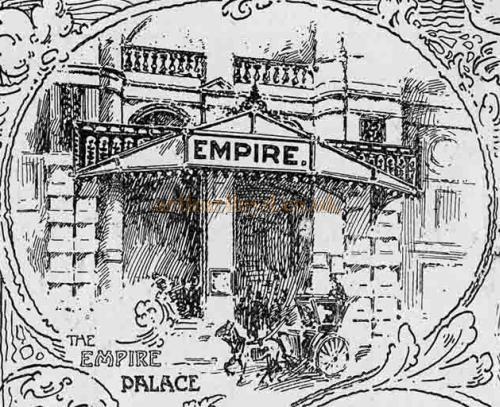
The property was situated on the corner of Smallbrook Street and Hurst Street, and was designed by the renowned Theatre Architect Frank Matcham and built at a cost of £18,000. The theatre opened as the New Empire Palace of Varieties on the 7th of May 1894. The Empire was not the first place of entertainment on this site however, as it was constructed on the site of the former Day’s Crystal Palace Concert Hall.
Day’s Crystal Palace was built on part of the site of the former White Swan Public House for James Day. It was constructed by W Matthews and designed by the architect T Naden. Day installed a large Crystal Ball and mirrored walls in the Concert Hall and named it Day’s Crystal Palace Concert Hall for its opening on Thursday the 18th of September 1862.
Although always popular Day’s Crystal Palace Concert Hall finally closed in September 1893 when the site was sold to Moss Empires who demolished most of it and set about building a new theatre on the site, The Empire Theatre.
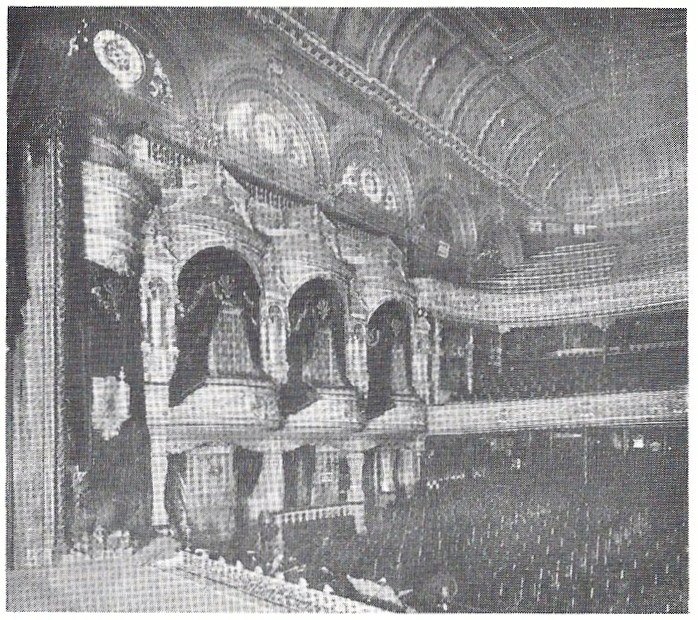
A contemporary description told us: The new auditorium is very large and well proportioned, and capable of accommodating about 3,000 persons. A very handsome facade in rich Italian renaissance, faced with red brick, with stone and cement-dressing, has been erected. This new building contains the entrances, staircases, retiring and dressing rooms, offices, and saloons. The principal entrance to the fauteuils and balcony is in the centre of the block. A large and handsome iron shelter covers the pavement, decorated in cream and gold, with rich coloured glass. Over this entrance is the directors’ room, above which is a richly carved scroll pediment containing the words “Empire Palace” surmounted by a lyre and flanked with groups of life-size statuary representing music and dancing. At the ends of the facade are large gables containing carved panels symbolical of the Arts.
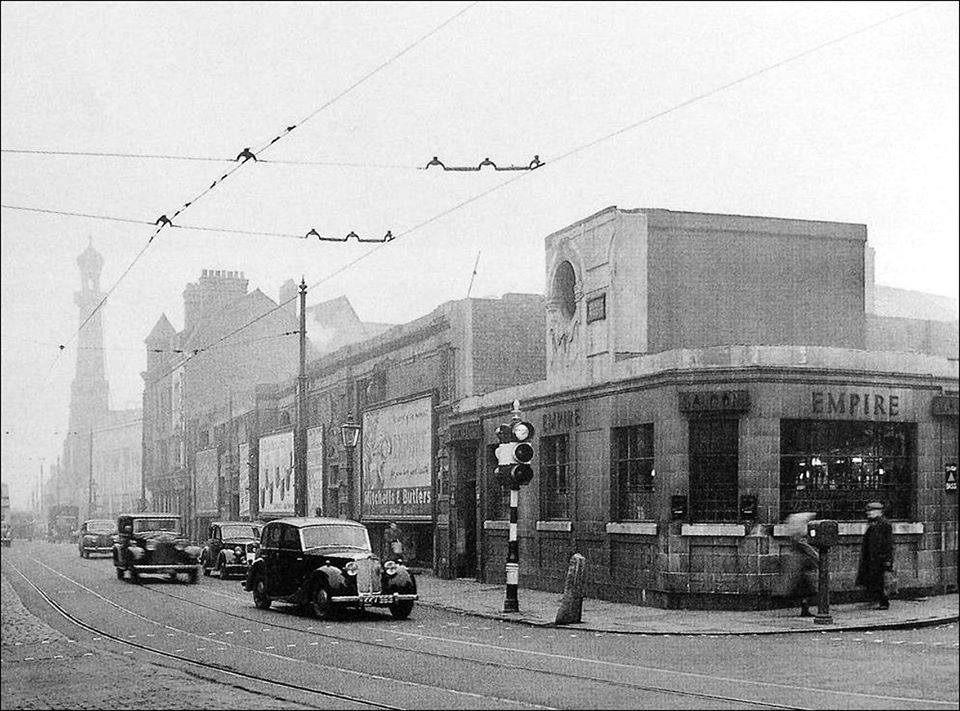
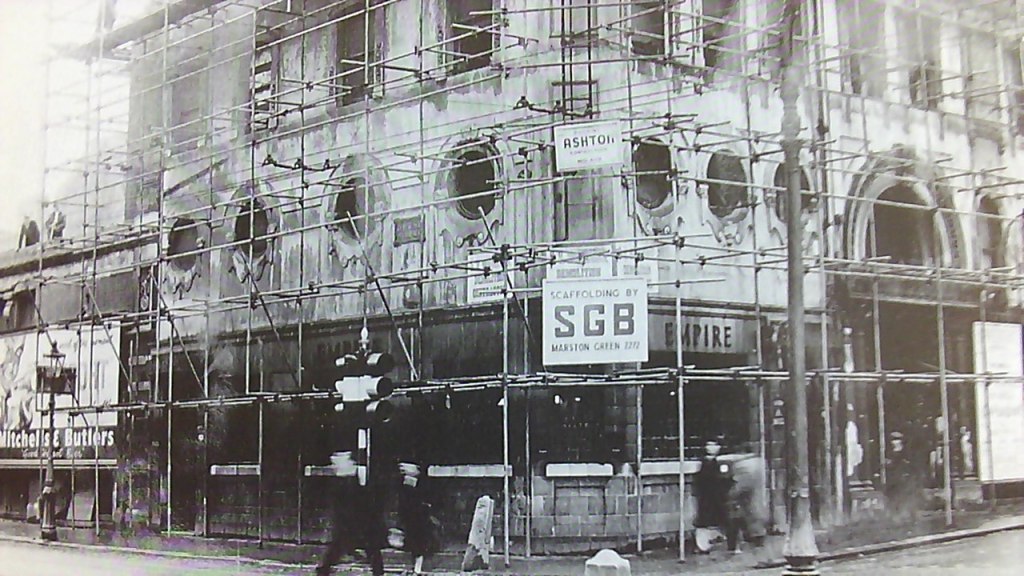
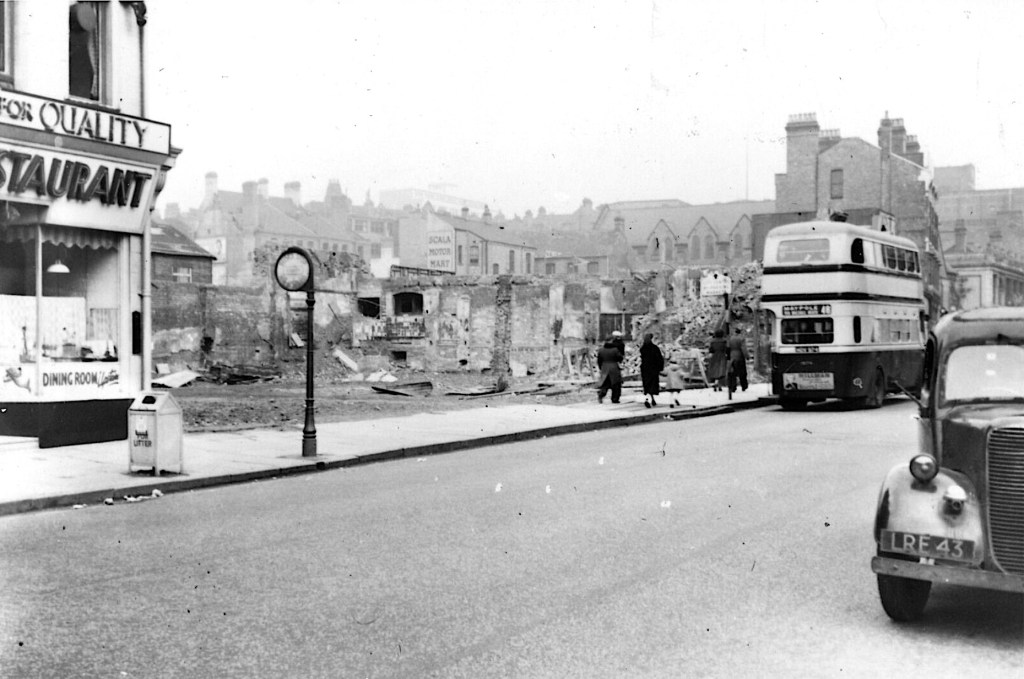
The Empire Theatre was a successful Variety House for many years but sadly the theatre was destroyed during the Second World War, by enemy action in 1941, and subsequently demolished in 1951.
German aircraft not only bombed the Empire, but also bombed the Hippodrome a few hundred yards away. The audience had all gone home when the incendiaries fell on that theatre. Tony’s Ballroom next door was another casualty of the bombing.

 hurst-street.com