
The Birmingham Hippodrome
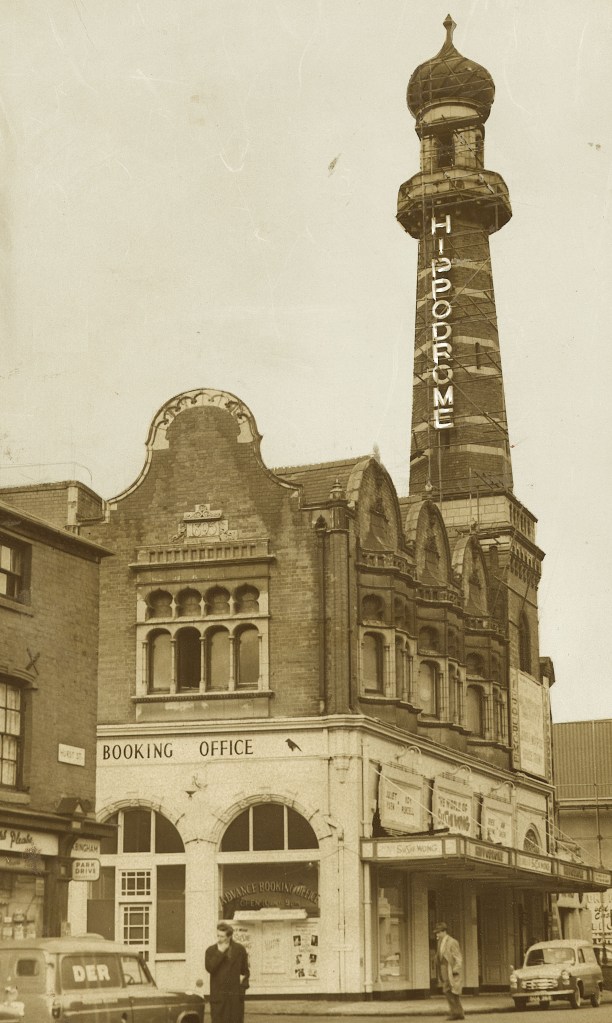
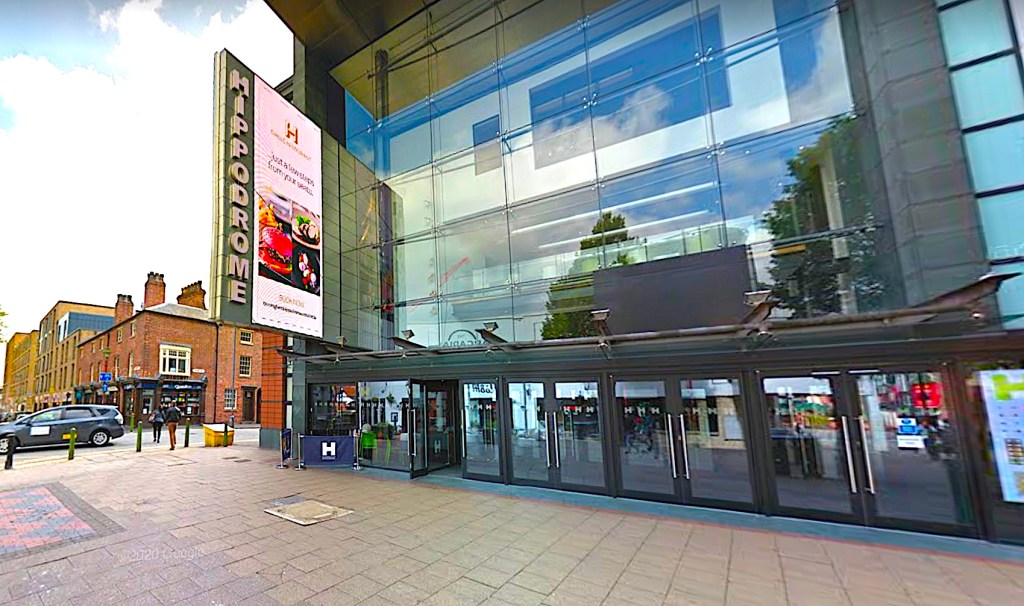
We are going to start our walk outside The Birmingham Hippodrome Theatre as one of the most significant and visited buildings in Birmingham. With a regular annual attendance of approaching 600,000, the Birmingham Hippodrome is the busiest single theatre in the United Kingdom, and the busiest venue for dance outside London.
The theatre is the home of the Birmingham Royal Ballet, it also hosts a wide variety of other performances including visiting opera and ballet companies, touring West End shows, pantomime and drama.
The first venue built on the Hippodrome site was The City Assembly rooms in 1895 by bookmaker brothers Henry & James Draysey. If you want an idea of what the Draysey brothers might have looked like, then maybe imagine the Shelby family in Peaky Blinders! They’d knocked down a pub and courts of back to back houses that had been standing there for most of the century.
In 1899 a in indoor circus ring seating about 3,000, was added to the rear of the venue, designed by local architect F. W. Lloyd, together with a Moorish tower and the enterprise named the “Tower of Varieties”. This lasted just five weeks and after failing, it was rebuilt as a normal variety theatre, seating about 2,500 and reopened as the “Tivoli” in 1900.
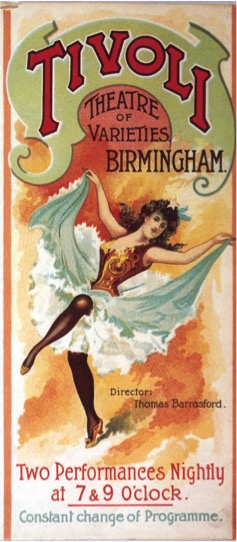
It became “The Hippodrome” under the ownership of impresario Thomas Barrasford in October 1903. The current neo-classical auditorium now seats about 1,850 and was redesigned by Burdwood and Mitchell in 1924. The entrance building and tower were demolished in the early 1960s, and a new modern entrance constructed. At the same time the theatre was renamed ‘Birmingham Theatre’ for a few years.

1967 
1972
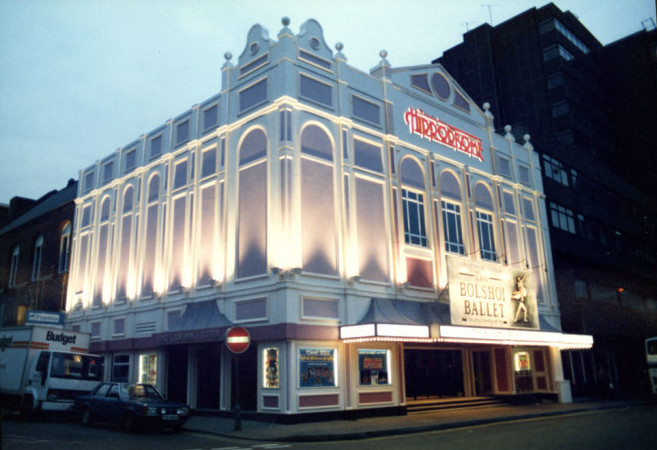
Isn’t it fortunate that the words “Birmingham” and “Hippodrome” both have the same number of letters! This plain facade was replaced in the 1980s with pink fibreglass mock-Victorian plasterwork, whilst the stage was extended by demolishing the Mission hall that stood behind it in Inge Street. This allowed the Hippodrome to accommodate larger shows.
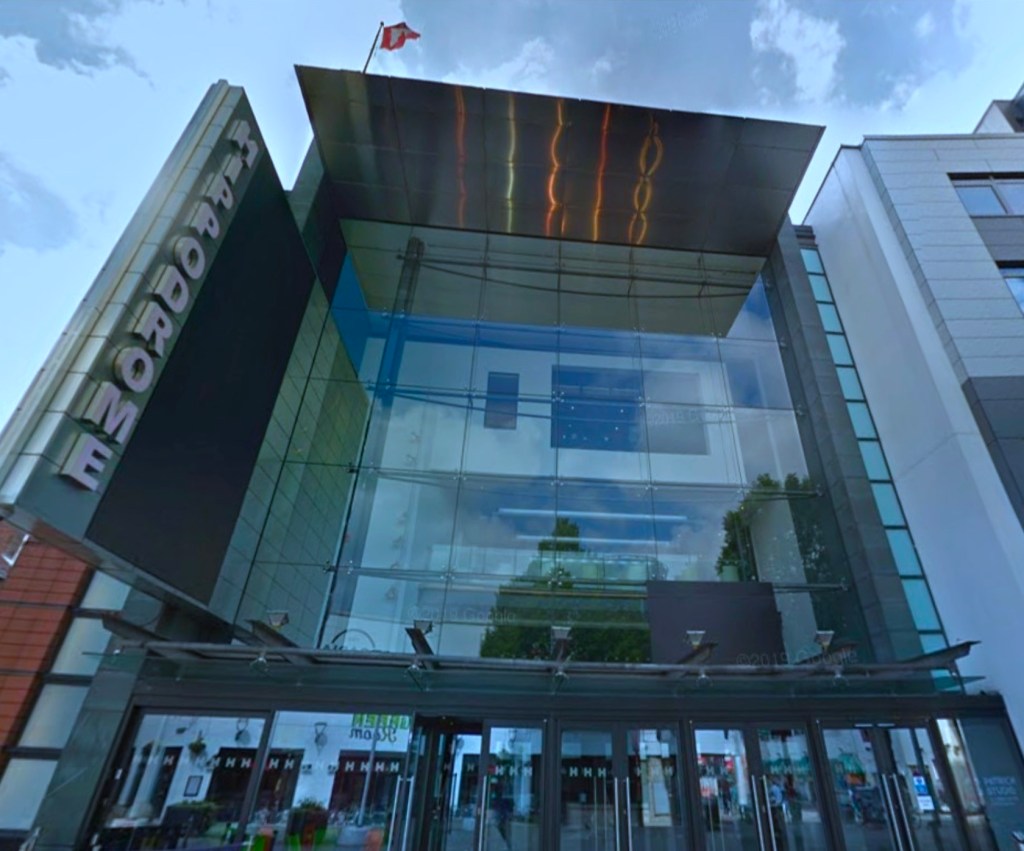
The exterior of the theatre was substantially rebuilt by Associated Architects and Law and Dunbar- Nasmith in 2001, with a new glass facade and accommodation for the Birmingham Royal Ballet and additional performance space. An excellent restaurant was added overlooking the street on the first floor.
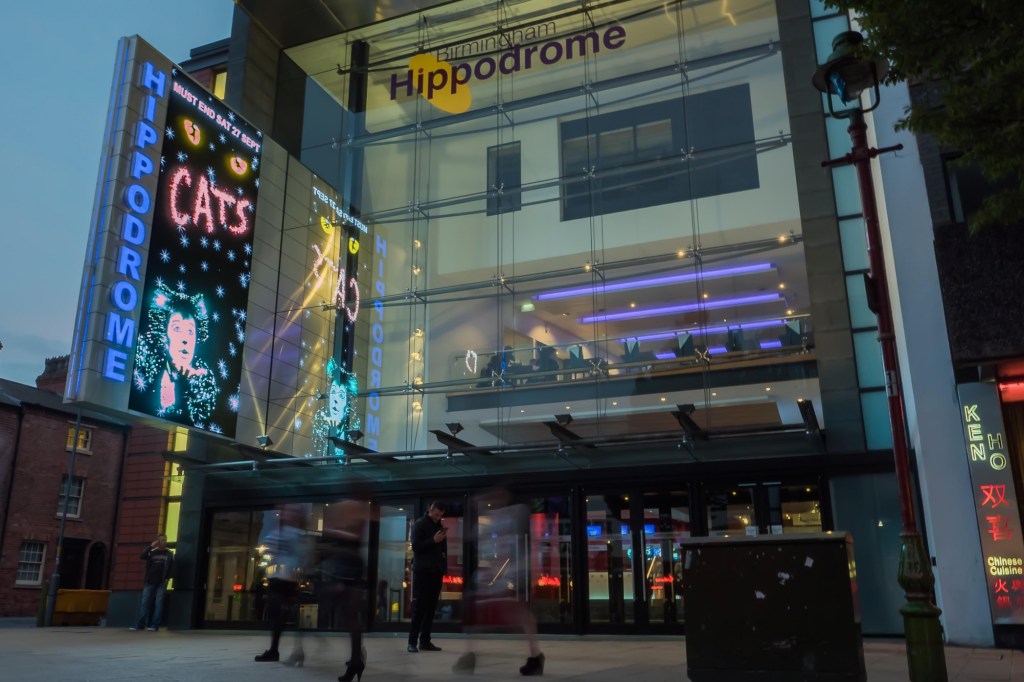
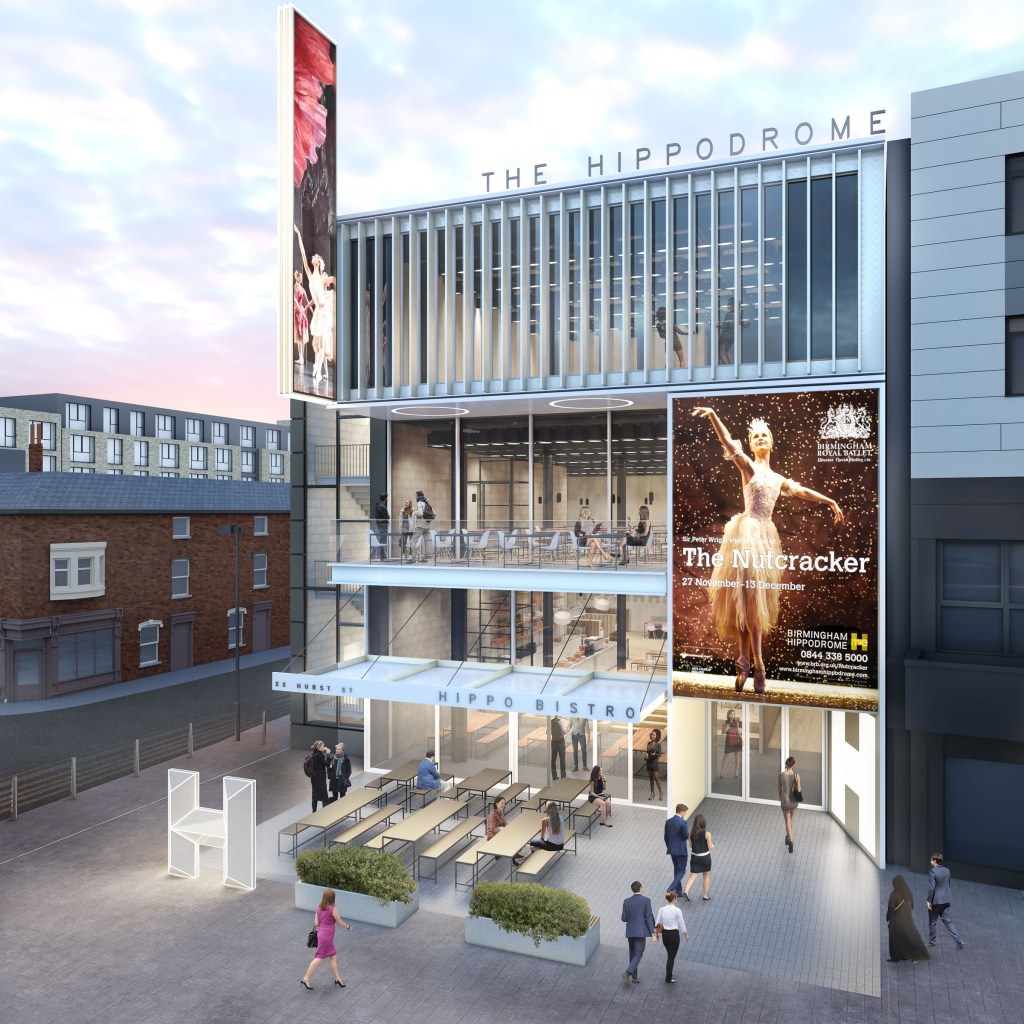
The shape of Birmingham Hippodrome has changed over time. There have been four different faces and a vast number of internal and external alterations and improvements. These building projects have increased the theatre’s footprint and capacity, enabling it to host the biggest and best shows around.
But more changes are planned for a new-look Hippodrome for completion in the next couple of years.
A Victorian face
Although the main entrance was on Hurst Street, the body of the theatre was behind the City Assembly rooms and reached by a 114 foot long underground corridor.
Initially the theatre was a circus ring, which could have been flooded for water shows. and instead of a traditional sawdust ring it had special matting floor.
On Birmingham’s skyline now rose a distinctive Moorish style onion shaped tower, inspired by the Tower Circus at Blackpool and marking the arrival of a new home of entertainment.
In 1900 the interior was completely refurbished, transforming the building into a music hall with a conventional stage. The newly named Tivoli Theatre of Varieties boasted a neo-Classical auditorium. Seats were upholstered in crimson and the stage curtains matched too. Two gas-engines on the right side of the stalls powered the theatre’s electric lights.
For the next 17 years new plans for improvements and rebuilding the Birmingham Hippodrome were commissioned and some approved by the City of Birmingham Planning Department. However, only small scale internal projects were carried out.
In 1924, the theatre was sold to Moss Empires and underwent a major refurbishment to a cost of £40,000. This included a steep fan-shaped circle to replace the two circles and a new colour scheme of fashionable art deco grey, gold and rose pink.
Swinging into the Sixties
In the early 1960s Moss Empires considered demolition of the theatre, but decided on extensive alterations instead, and sold the more valuable land where the Theatre Royal on stood New Street.
In 1963 the foyer and main facade were completely refurbished, a new box office built, dressings rooms improved and a new stalls bar added. The tower, which had become unstable and dangerous, was demolished too.
The theatre closed for three months while the major work was carried out. .
A Decade of Change
In 1979, when Moss Empires were considering demolition, the City of Birmingham acquired the theatre from Moss Empires and established Birmingham Hippodrome Theatre Trust. Reviewing conditions for audiences, performers and staff a major alterations programme was initiated, which continued through the decade.
Major alterations included a new stage, fly tower, dressing rooms, a new band-room and orchestra pit. Second phase improvements tackled restoration of the auditorium, front of house facilities and new heating and ventilation systems.
In 1984 the main face was clad in a coloured glass fibre material.
After land on Thorp Street was acquired a new annexe was built in 1990. This self-contained unit, linked to the theatre provided the headquarters to the new Birmingham Royal Ballet.
Facing the Future
1999 saw the start of another major extension and improvement project called Hippodrome 2000 Development Project, a partnership between The Birmingham Hippodrome, Birmingham Royal Ballet and DanceXchange.
It led to an impressive overhaul of the theatre’s public and backstage areas including the addition of a new 200 seat studio theatre – the Patrick Centre, dance studios, new front of house facilities, a centre for the treatment of dance injuries and a striking new face. The project won an RIBA Architecture Award in 2002.
Let’s move on to see what was next door to the Birmingham Hippodrome
 hurst-street.com