
The Jewish Community

The Jewish community in Birmingham is believed to have come into existence around 1730. The early Jewish settlers included peddlers who used Birmingham as a base. The first known glass furnace was set up by Meyer Opperheim in or about 1760 on the road to Wolverhampton. This became Show Hill and the glassworks stood on the site now occupied by the station. In 1783 a synagogue existed in the “The Froggery” a low swampy area, which is now the site of New Street Station.
By 1800 a Jewish community was already well established, Jewish names appear in the earliest Birmingham Trade Directory of 1767 lists Michael and Barnet Freidberg, glasscutters of Dudley Street and Mayer Opnaim, merchant of Snow Hill amongst others. Life was not easy, many began their trading careers as hawkers, emerging from the Froggery with portable shops to “hawk “around the Bull Ring. The move into more reputable trades came later. By now many trades in the town had their Jewish element, in 1852 there were sixteen Jewish pawnbrokers in the City centre.
A new synagogue, constructed in Severn Street in 1809 was wrecked in the riots of 1813 along with the nonconformists chapels, but was rebuilt in 1827. The Singers Hill Synagogue in Bulcher Street, was consecrated in 1856 and is still in use. The Jewish community included, jewellers, toy makers, tailors, merchants and manufacturers.
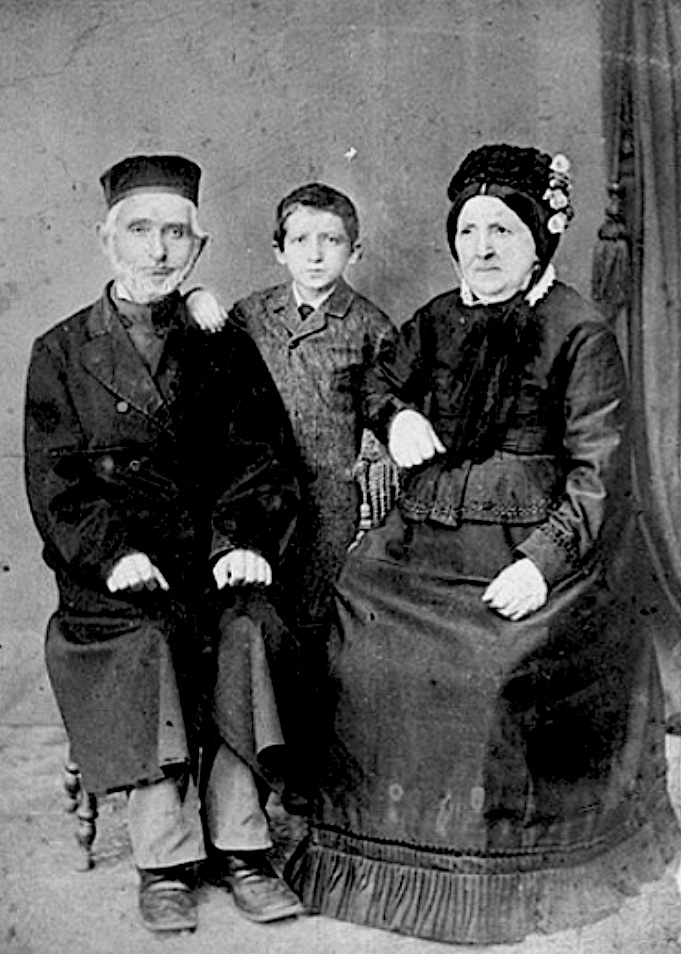
By the 1860’s there were 140 Jewish families living in Birmingham making a total of around 730 people. The records of the time indicate a wide variety of origins for these people, but the majority were Ashkenazi Jews fleeing from discrimination in Poland, Prussia and Germany.
For most of the 19th century it was around Hurst Street, Inge Street, and Smallbrook Street that was the centre of the Jewish community. A synagogue was built in Hurst Street in 1791 and the foundation stone of a Hebrew National School in the street was laid on 9th August 1843 by Sir Moses Montefiore. The courts around Hurst Street were well adapted as havens for a particular community or people sharing the same language. Inge Street had whole courts populated by Russians or Poles. Often settlement began as lodgers on the top floor of a house owned by an earlier migrant. Asher Rosenberg housed twelve Jewish lodgers in a passage off Hurst Street, all glaziers or tailors, a further house owned by Harris Belcher had five Jewish lodgers in his house as well as seven children.
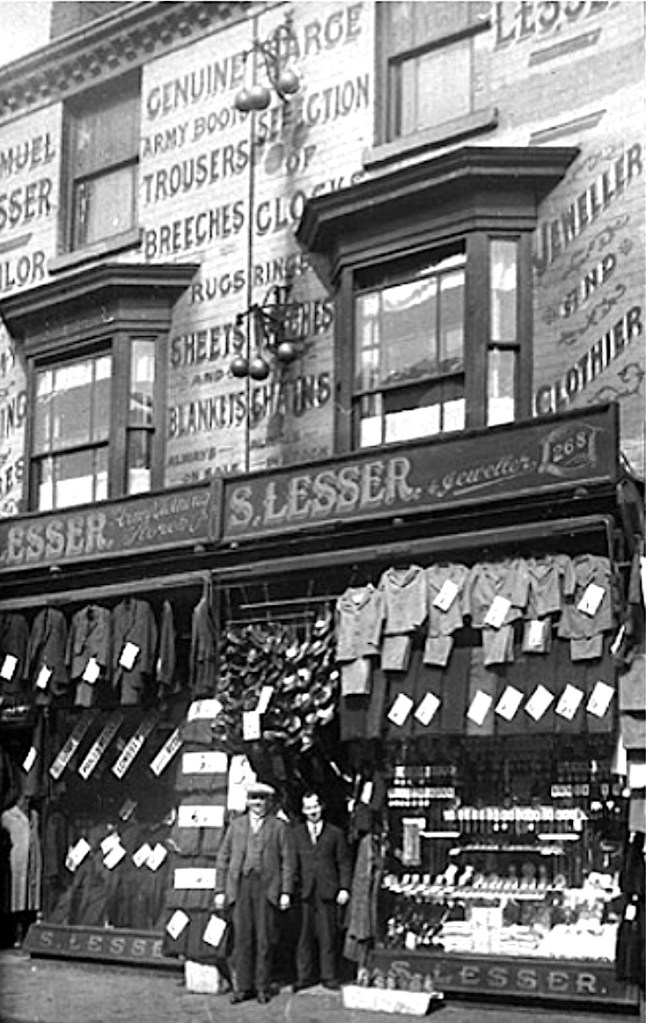
Although some wealthier members of the community were able to move into the more affluent suburbs of the city, Handsworth and Edgbaston by the 1870’s, many streets in the centre of the town retained a strong Jewish influence. Hurst Street as well as having a Synagogue, Hebrew school and a boarding house for Jewish market traders, had the added attraction of a number of music halls to a community much involved in the stage, both as performers and patrons. The Jewish community extended to the west into the area on the other side of Horse Fair and Suffolk Street where Springers Hill Synagogue was built.
The owner of the Electric Theatre in Station Street was Joseph Cohen a Jewish immigrant, as was Oscar Deutsch the founder of the Odeon picture house empire. In the 20th century Jews were leading figures in property development and in the entertainment world. Immigration from Eastern Europe affected Birmingham less than other large cities. Jews have played a prominent part in the civic and business life of Birmingham. Sir David Davis served as Lord mayor in 1922 and 1923, as did Louis Glass in 1963-64.
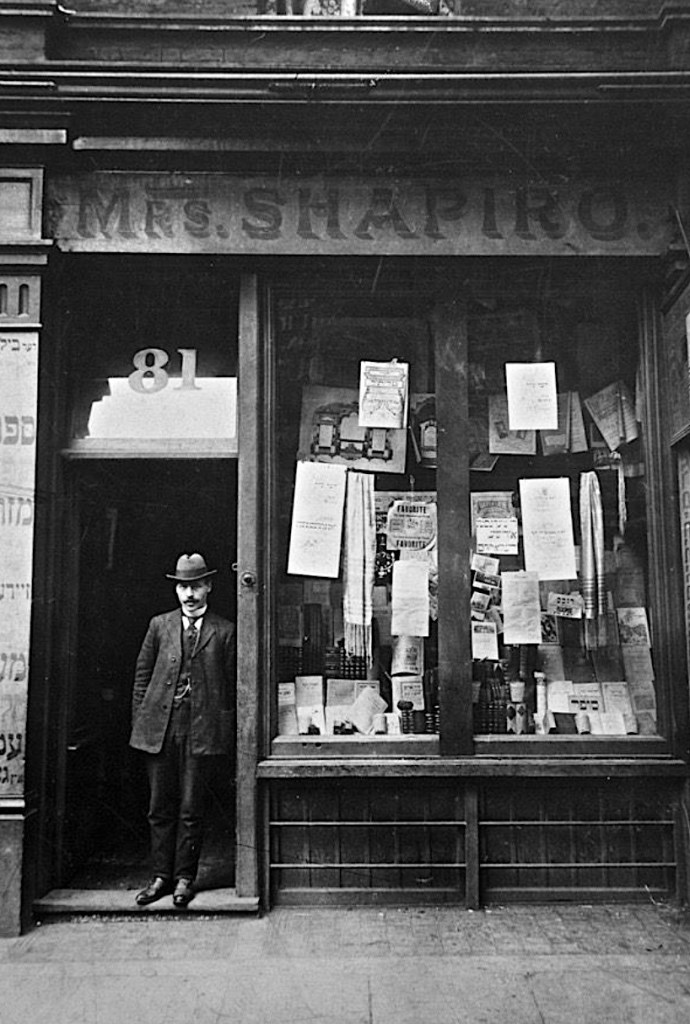
Birmingham whose Jewish population numbered approximately 6,300 in 1967, had the lowest percentage of Jews of any great city in England. By the mid 1990’s the Jewish population had dropped to approximately 3,000. Birmingham still retains a thriving Jewish community, particularly in the Moseley area, but one that is now scattered across the city.
 hurst-street.com