
Hurst Street in the 1950’s
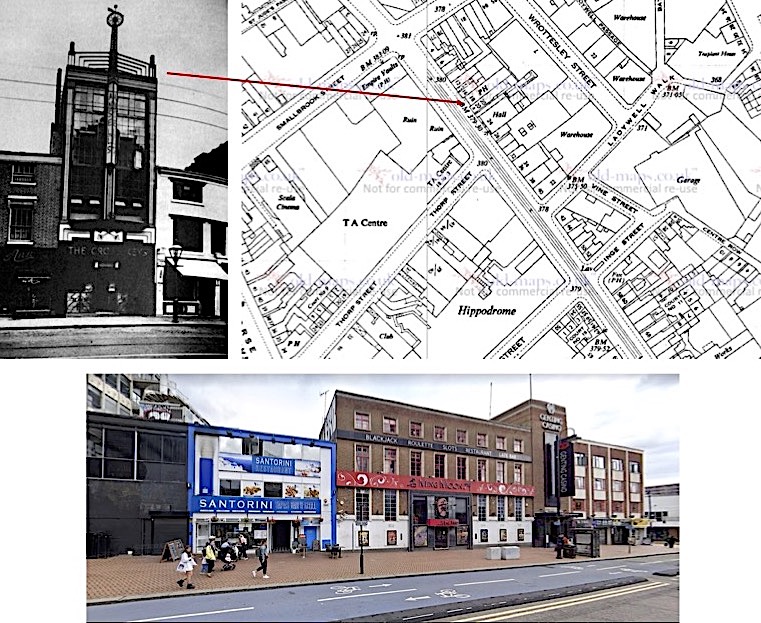
We’ll just pause to take a pictorial “THEN & NOW” journey along Hurst Street in the 1950s starting with The Cross Keys pub. This was on the left hand side of the road, just two doors from the Unitarian Chapel. The whole of this side of Hurst Street to Ladywell Walk was redeveloped in the early 1960s when Smallbrook Ringway (Queensway) was created. The Cross Keys stood where the restaurant on the left is in the 2020 photograph. Below is the Cross Keys in 1933 and 2020 along with the 1950 map.
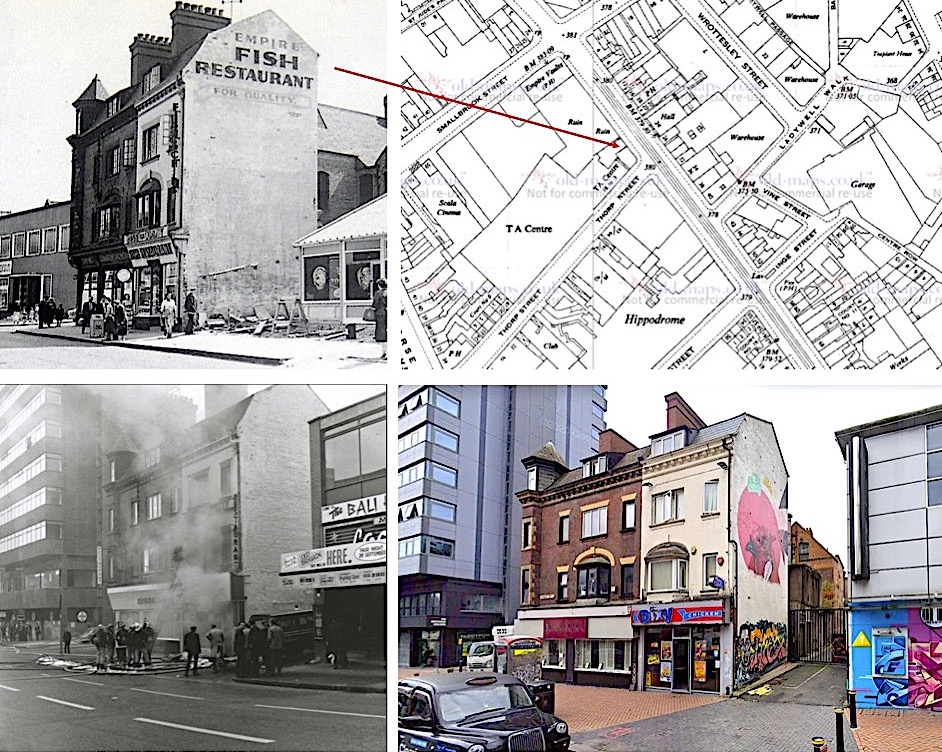
Next is the Empire Fish Restaurant which stood opposite The Cross Keys at no 21, near to the corner with Thorp Street. The shop was a victim of fire in 1968. The building is still there, and performing a similar purpose – it is now “Dixy Chicken” – a fast-food chain that specializes in Halal chicken.
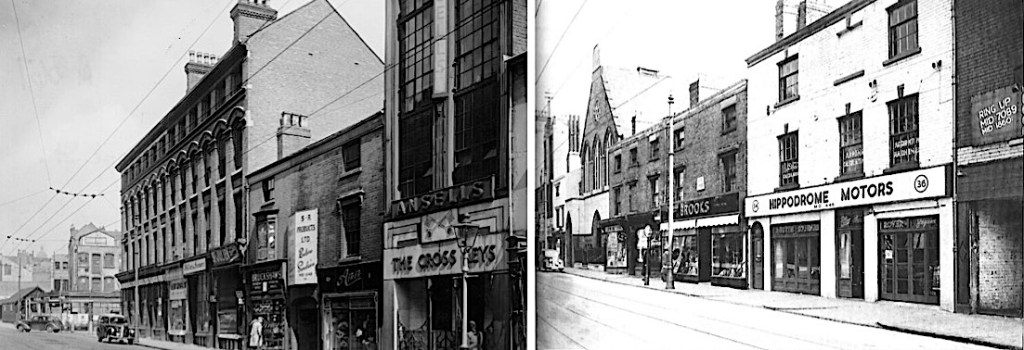
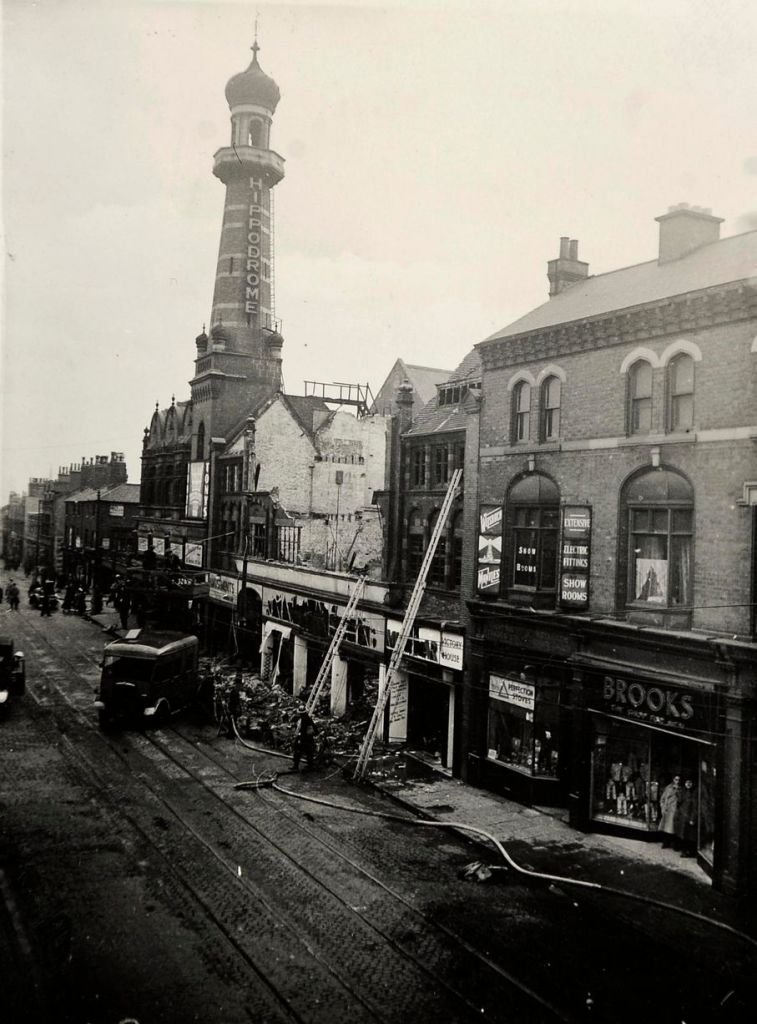
The next two photographs cover the east side of Hurst Street between Smallbrook Street and Ladywell Walk in 1950 where virtually the whole side consisted of shops. The first photograph covers no 4 on the left where George Hull were drysalters, down to the Cross Keys. The second is from the Cross Keys, which is just visible on the right. The Unitarian Chapel – listed in 1950 as the “New Synagogue” – stands tall over the shops, Hippodrome Motors is at no 34 & 36 then Brookes and Hawkes who were hardware merchants are on the right standing at the corner of Ladywell Walk.


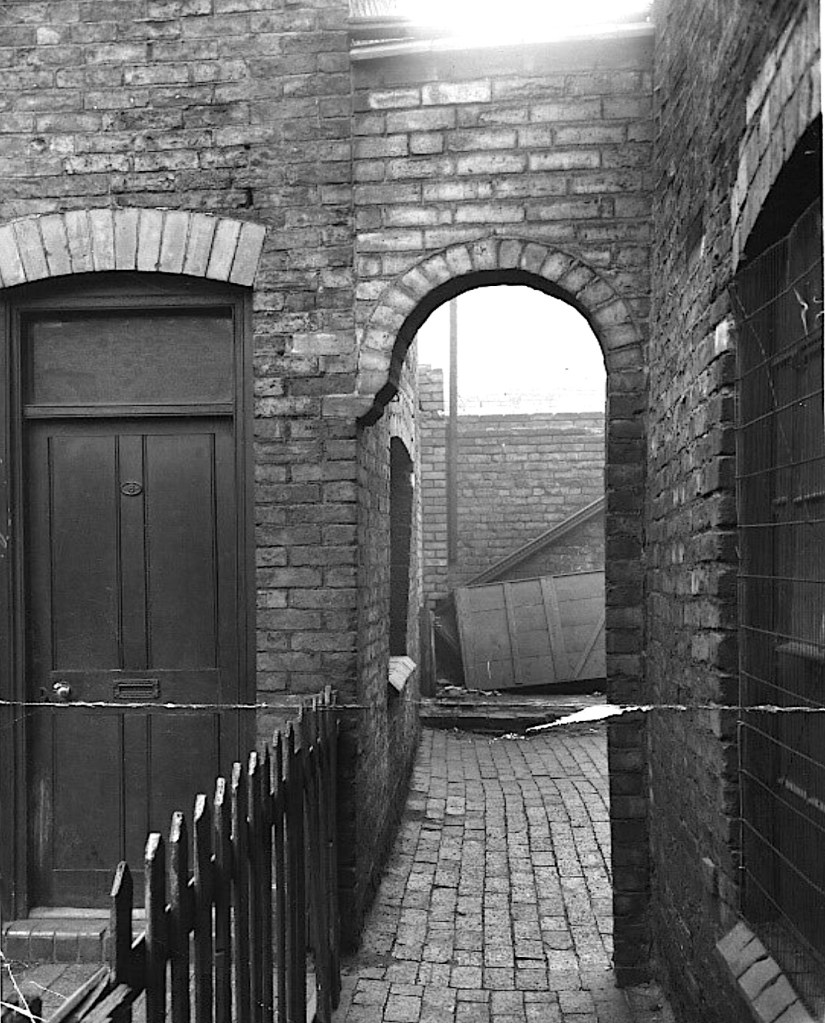
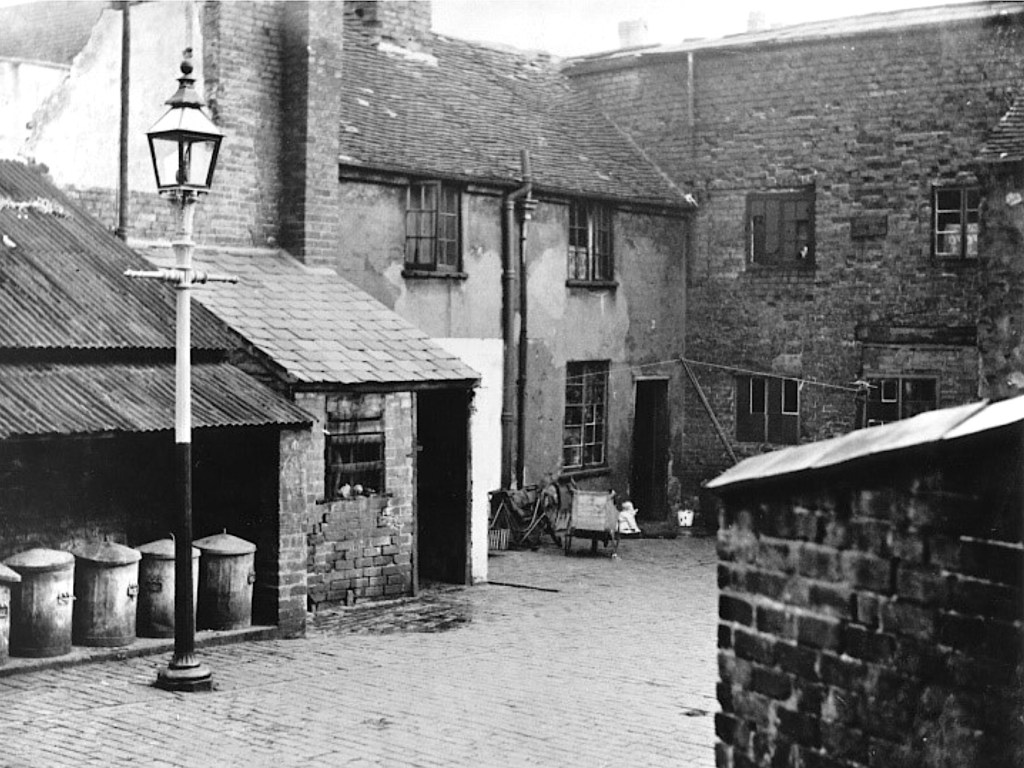
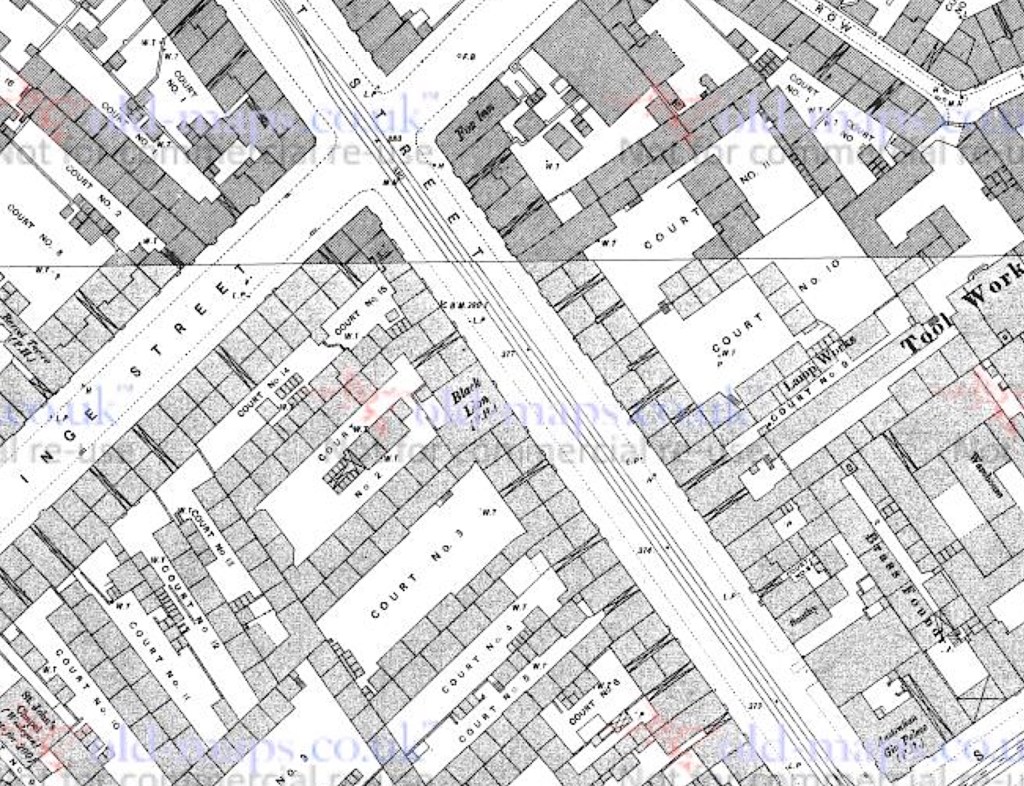
There appear to have been about 28 courts of back-to-back houses in Hurst Street as of the year 1900. However the majority had vanished by 1950. Many of the original ones seem to have become shops or small workshops over time and more had been demolished to make way for factories. Here is the archway into a Hurst Street court and Court 10 Hurst Street which was still standing in 1950. It was opposite the Black Lion pub as can be seen in the map from 1889. We will go elsewhere to look at the National Trust’s Birmingham Back to Backs which is Court 15 Inge Street.
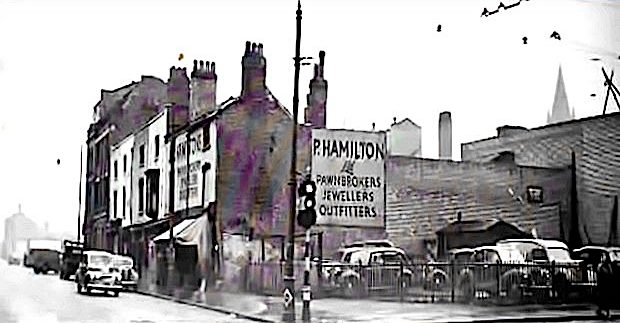
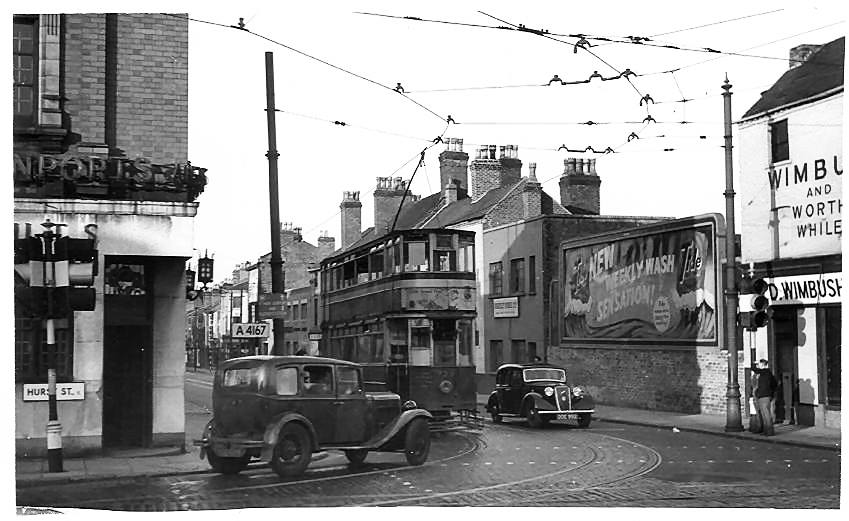
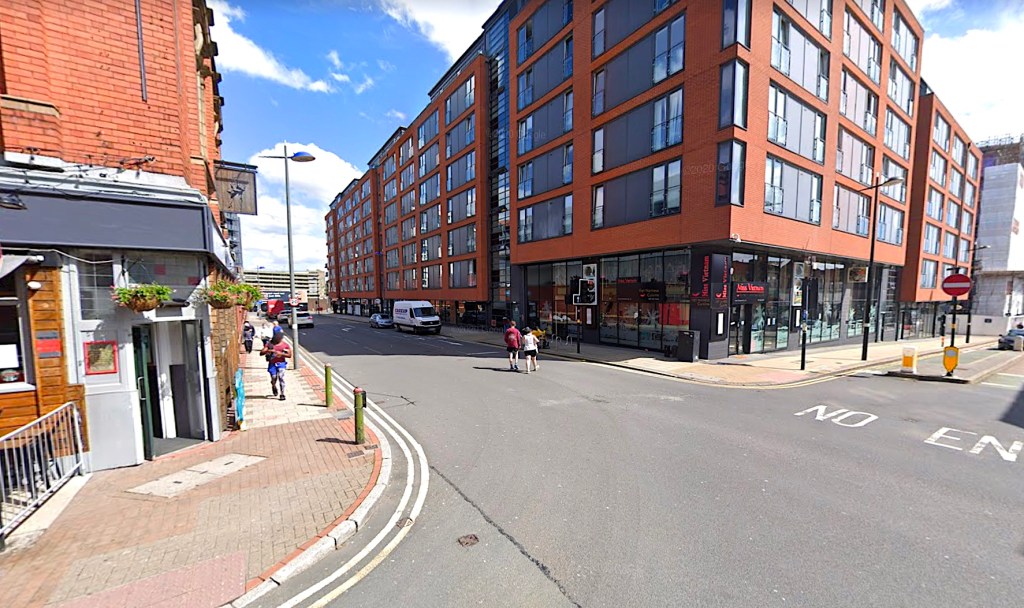
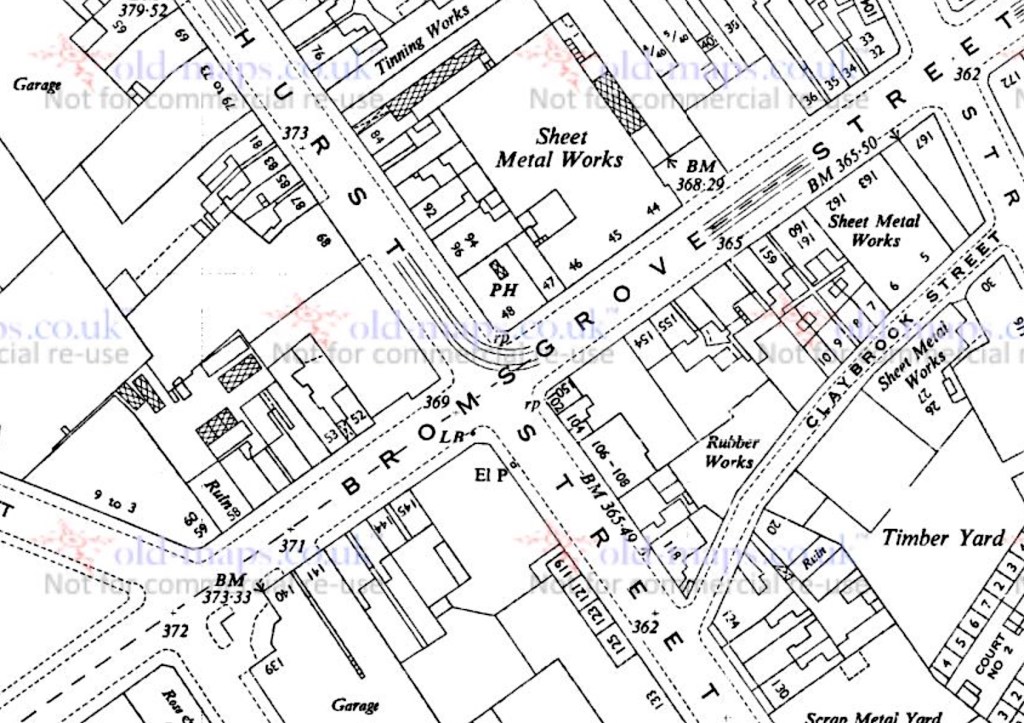
About half way down Hurst Street is the Junction with Bromsgrove Street which can be seen here in the 1950s. The first photograph shows Bromsgrove Street on the left looking to the west. The yard with cars belonged to Evans & Kitchen Ltd who were motor dealers with an Austin franchise. The second photograph is taken towards the east with a tram having turned from Hurst Street into Bromsgrove Street. This would have been on one of the Moseley Road routes not long before closure. The next two photographs show the same locations on a sunny day in August 2020. The one remaining building in these photographs is the Australian Gin Bar, later called Missing – more about the pub later. The 1950s map of the junction shows that many of the houses that originally lined Hurst Street were still standing, but by then being used as shops or for other commercial purposes.

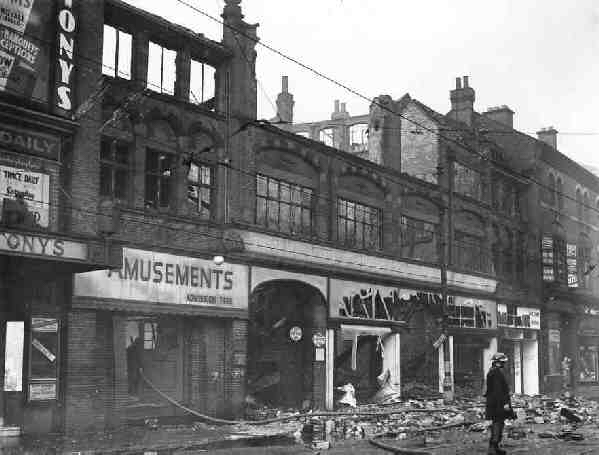
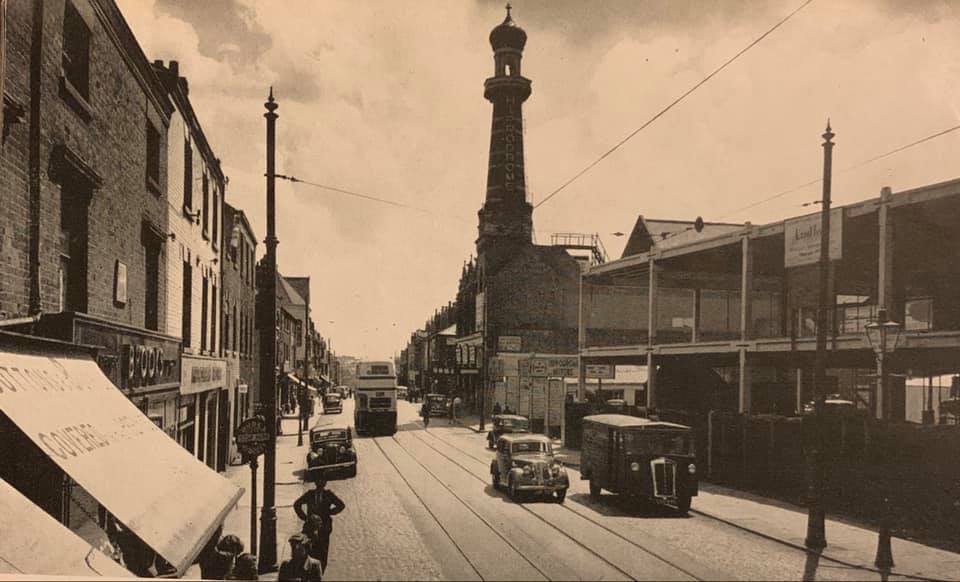
In the 1950s the buildings between Thorp Street and the Hippodrome Theatre had been demolished following bomb damage during the second world war. Seen here is the devastation caused to the buildings. In the early 1950s Hippodrome Motors occupied some of the site. Then we can see the frame of the replacement building which was under construction and the finished article. Universal Sewing Machines were occupying the new building by 1956. It seems that within 10 years it was (long) overdue for replacement and the result is seen with its original aggregate cladding in 2011 and grey cladding (to cheer us up?) in 2019. This is a critical comment regarding the 11 storey Albany House taken from an architectural website: “Designed by Marshman & Warren, this office building was built between 1963 and 1965. It is ugly and the facade consists of aggregate.” Perhaps they hadn’t seen its predecessor!


2011 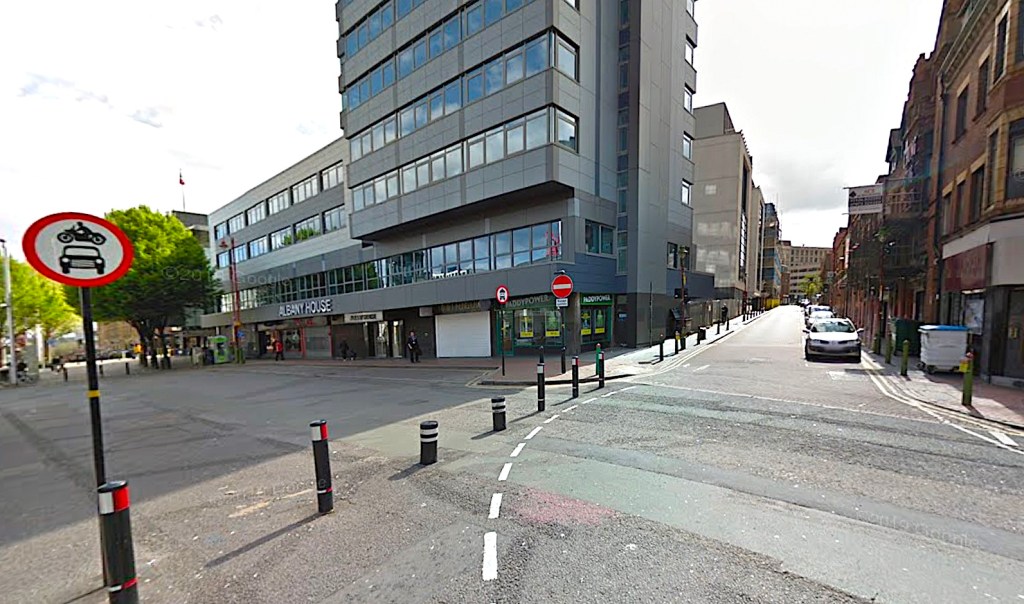
2019
 hurst-street.com